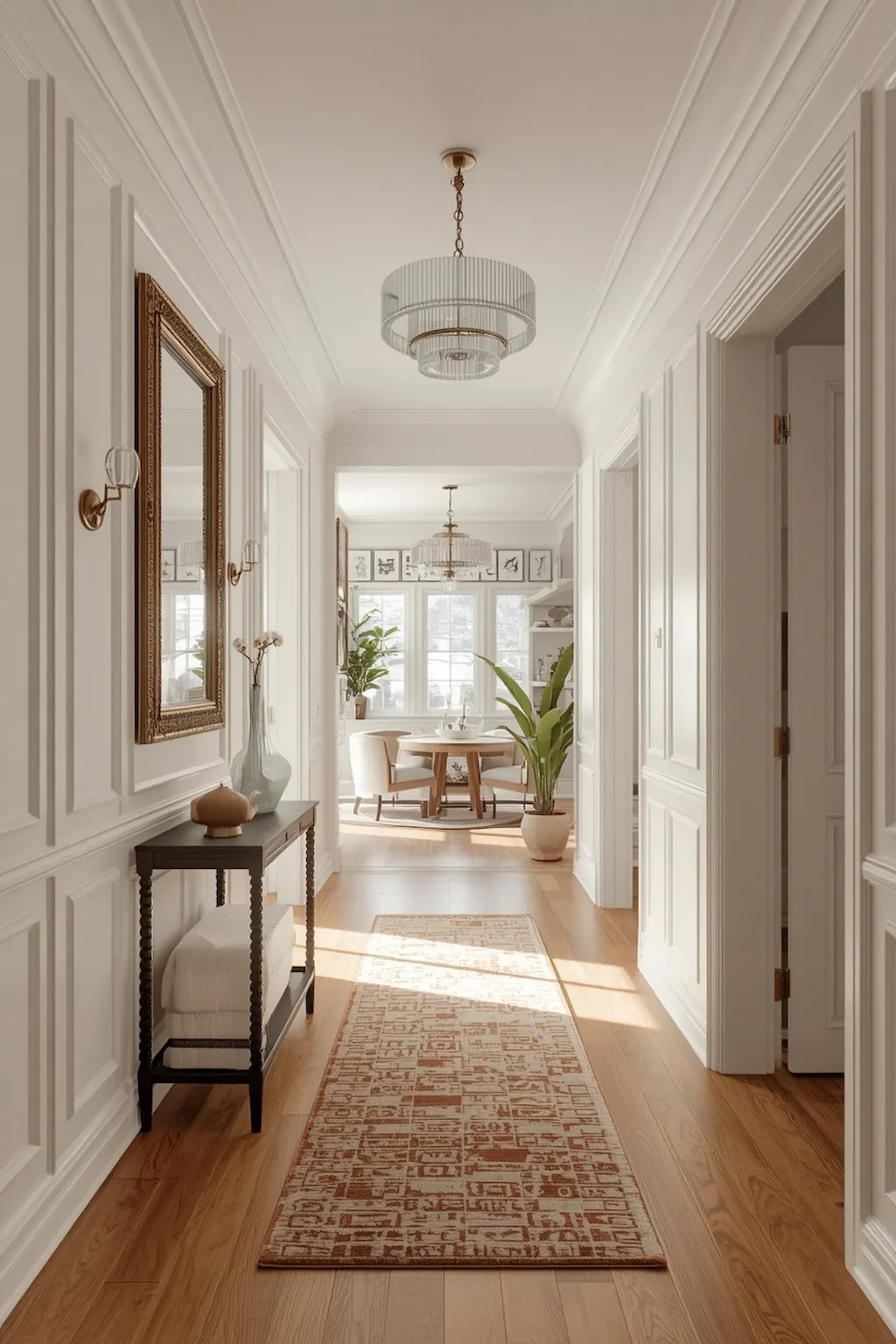
An upstairs hallway is often treated as nothing more than a passage connecting bedrooms and bathrooms. However, this frequently overlooked area has enormous design potential. With the right combination of decor, lighting, storage, and architectural details, an upstairs hallway can become a beautiful extension of your home’s interior rather than simply a transitional space.
Whether your hallway is narrow, wide, bright, or lacking natural light, thoughtful design choices can make it feel more welcoming, functional, and visually appealing. From cozy reading corners and gallery walls to elegant lighting and smart storage solutions, there are countless ways to transform this space into something truly special.
If you’re looking for inspiration, these upstairs hallway ideas will help you turn an ordinary corridor into one of the most stylish areas of your home.
1. Create a Bright and Airy Hallway
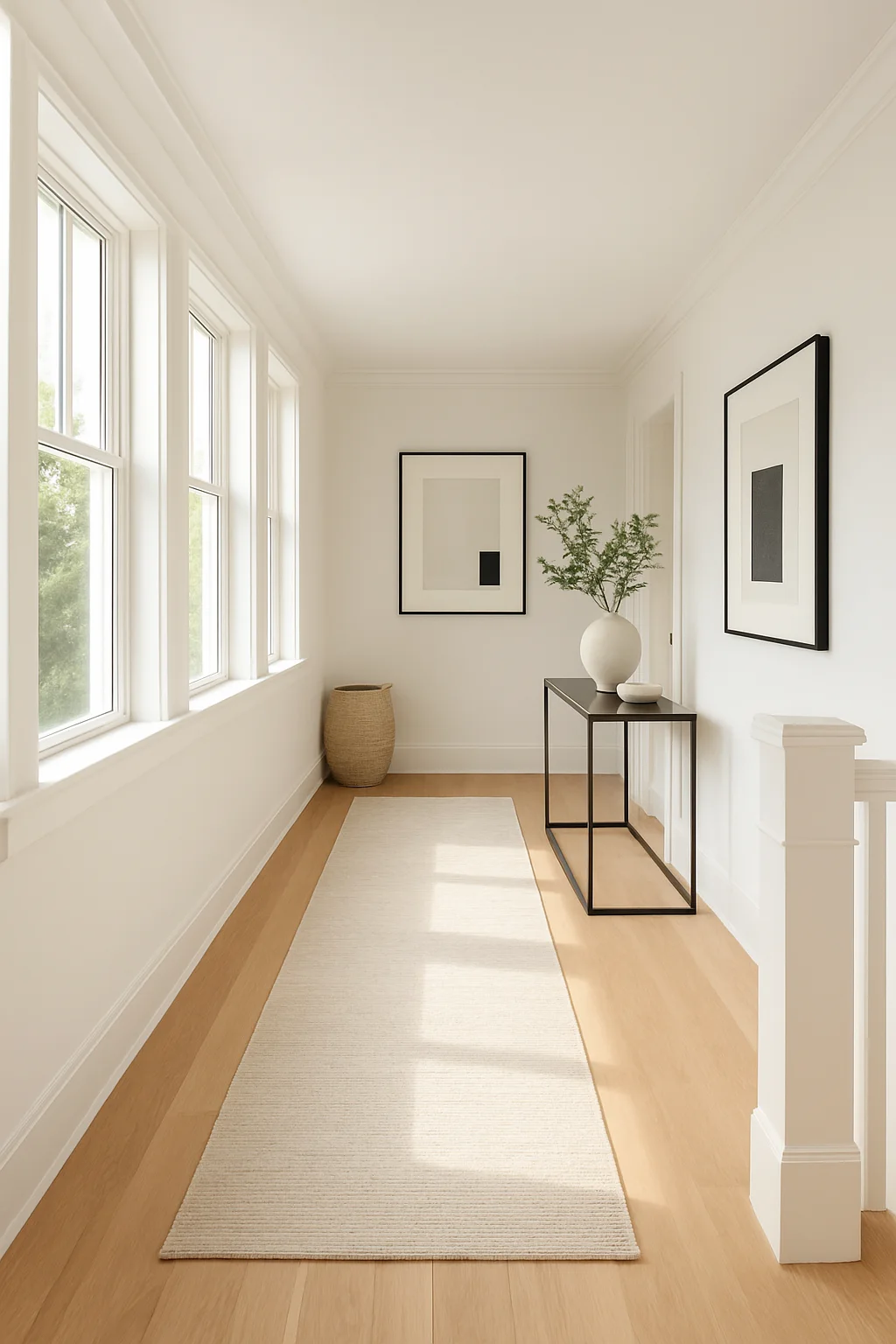
One of the easiest ways to enhance an upstairs hallway is by maximizing brightness. Light paint colors such as white, cream, soft gray, and warm beige help reflect light and make the space feel larger.
If natural light is limited, strategic lighting fixtures can help achieve the same airy effect.
Why It Works
Bright spaces feel more welcoming and visually expand narrow hallways.
Design Tips
- Choose light wall colors.
- Use reflective surfaces.
- Keep decor minimal.
- Maximize available light sources.
2. Design a Family Photo Gallery Wall
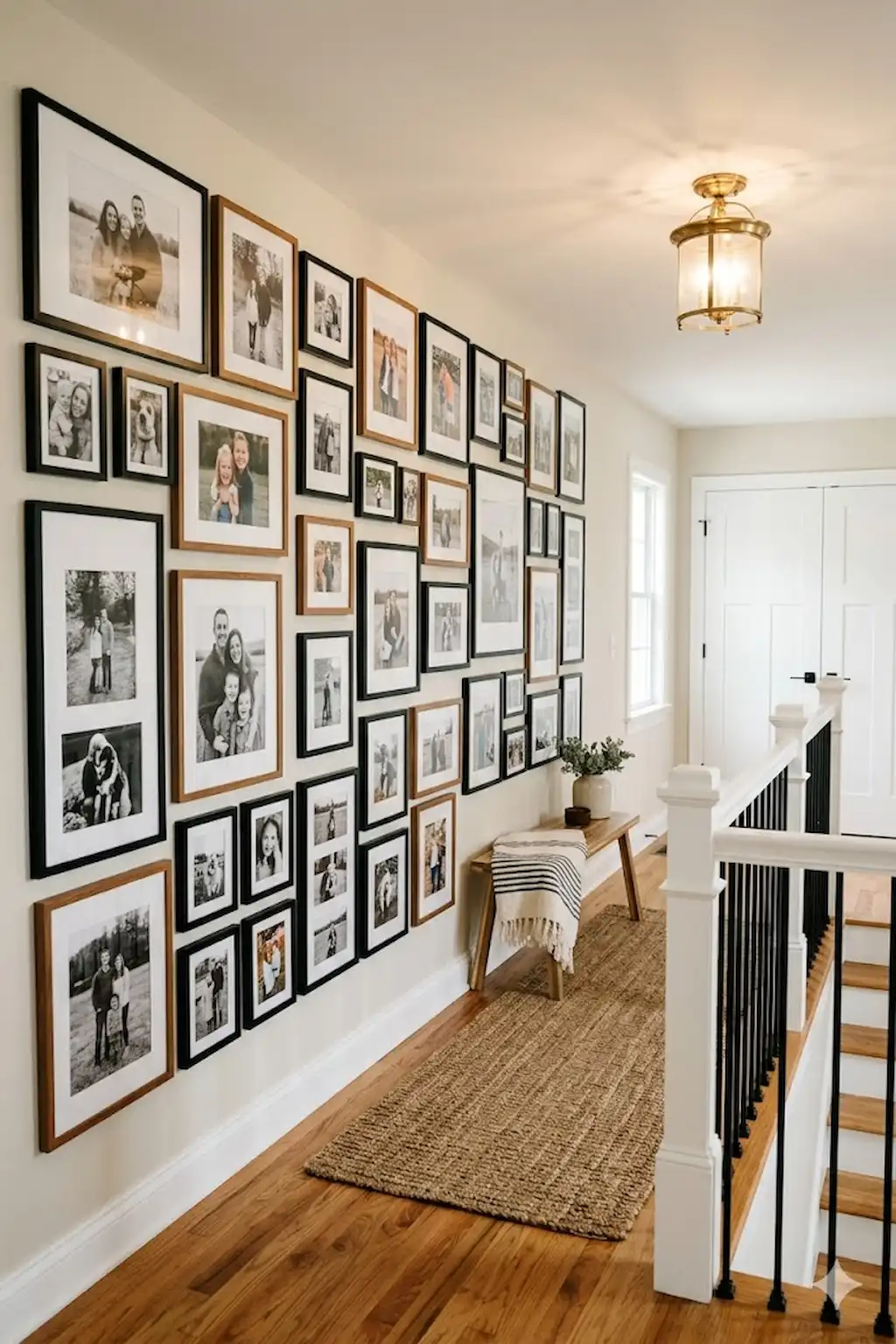
An upstairs hallway provides the perfect location for displaying family photos, travel memories, and meaningful artwork. A thoughtfully arranged gallery wall adds personality while creating visual interest.
This approach transforms an ordinary corridor into a space that tells your family’s story.
Why It Works
Gallery walls create an emotional connection while making the hallway feel intentional and inviting.
Design Tips
- Use coordinating frames.
- Maintain consistent spacing.
- Mix photo sizes.
- Keep the layout balanced.
3. Add a Stylish Console Table
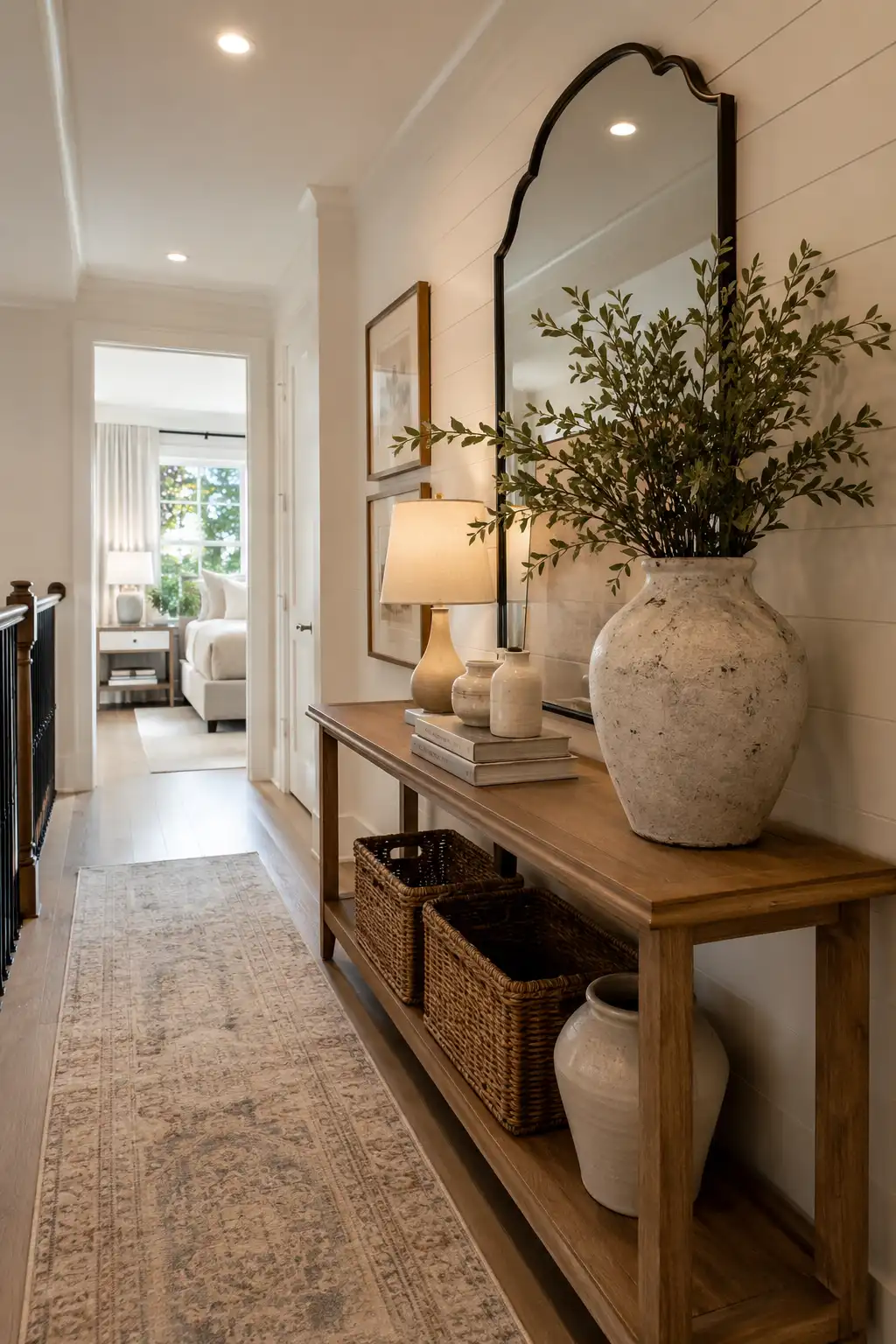
If your hallway is wide enough, a slim console table can provide both function and style. It offers space for decorative accessories, lamps, books, or storage baskets without overwhelming the area.
A console table can instantly make the hallway feel more complete and thoughtfully designed.
Why It Works
It adds visual structure and practical functionality.
Design Tips
- Choose narrow furniture.
- Add a decorative lamp.
- Keep surfaces uncluttered.
- Incorporate storage baskets.
4. Incorporate Built-In Storage
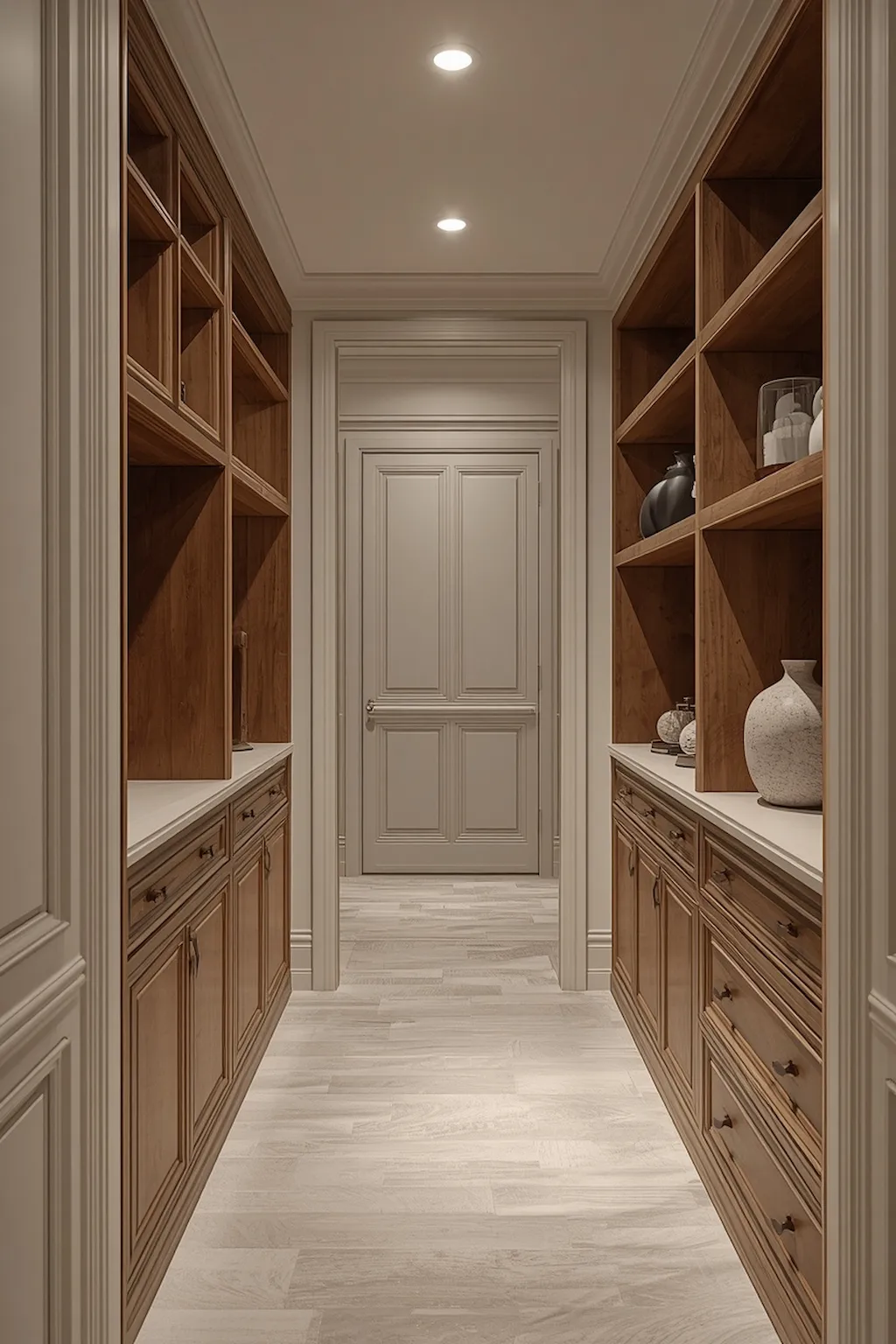
Hallways often contain unused wall space that can be transformed into valuable storage. Built-in cabinets, shelves, or window seats help keep the upstairs organized while maintaining a streamlined appearance.
This solution is particularly useful for growing families.
Why It Works
Built-ins maximize storage without sacrificing floor space.
Design Tips
- Match cabinetry to wall colors.
- Include both open and closed storage.
- Use vertical space efficiently.
- Keep designs simple.
5. Use Statement Lighting
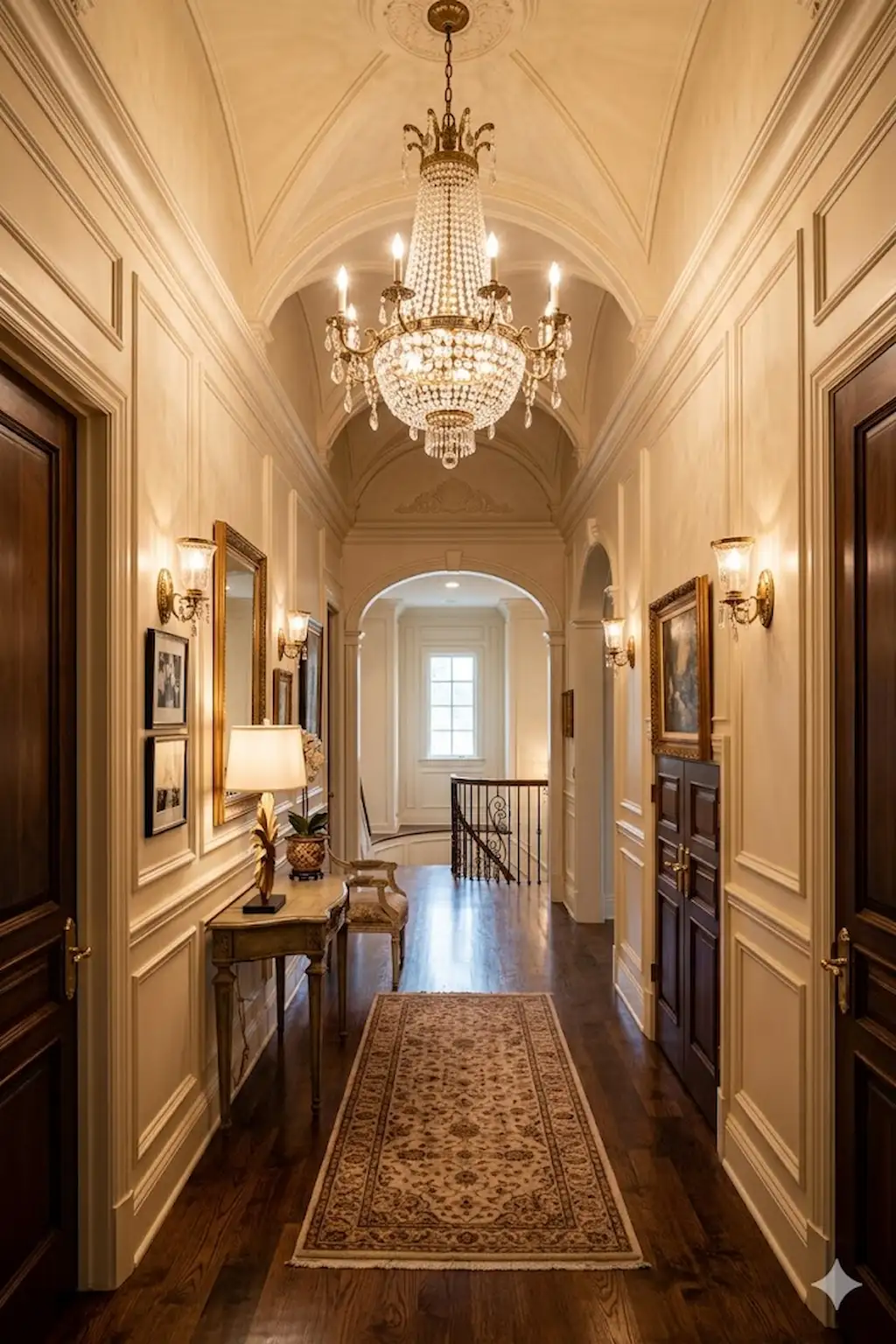
Lighting can completely change the atmosphere of an upstairs hallway. A beautiful chandelier, pendant light, or series of wall sconces creates a sophisticated focal point while improving functionality.
Decorative lighting also helps define the style of the space.
Why It Works
It combines practical illumination with visual impact.
Design Tips
- Choose fixtures proportional to the hallway.
- Use warm light bulbs.
- Layer lighting when possible.
- Coordinate finishes throughout the space.
6. Create a Cozy Reading Nook
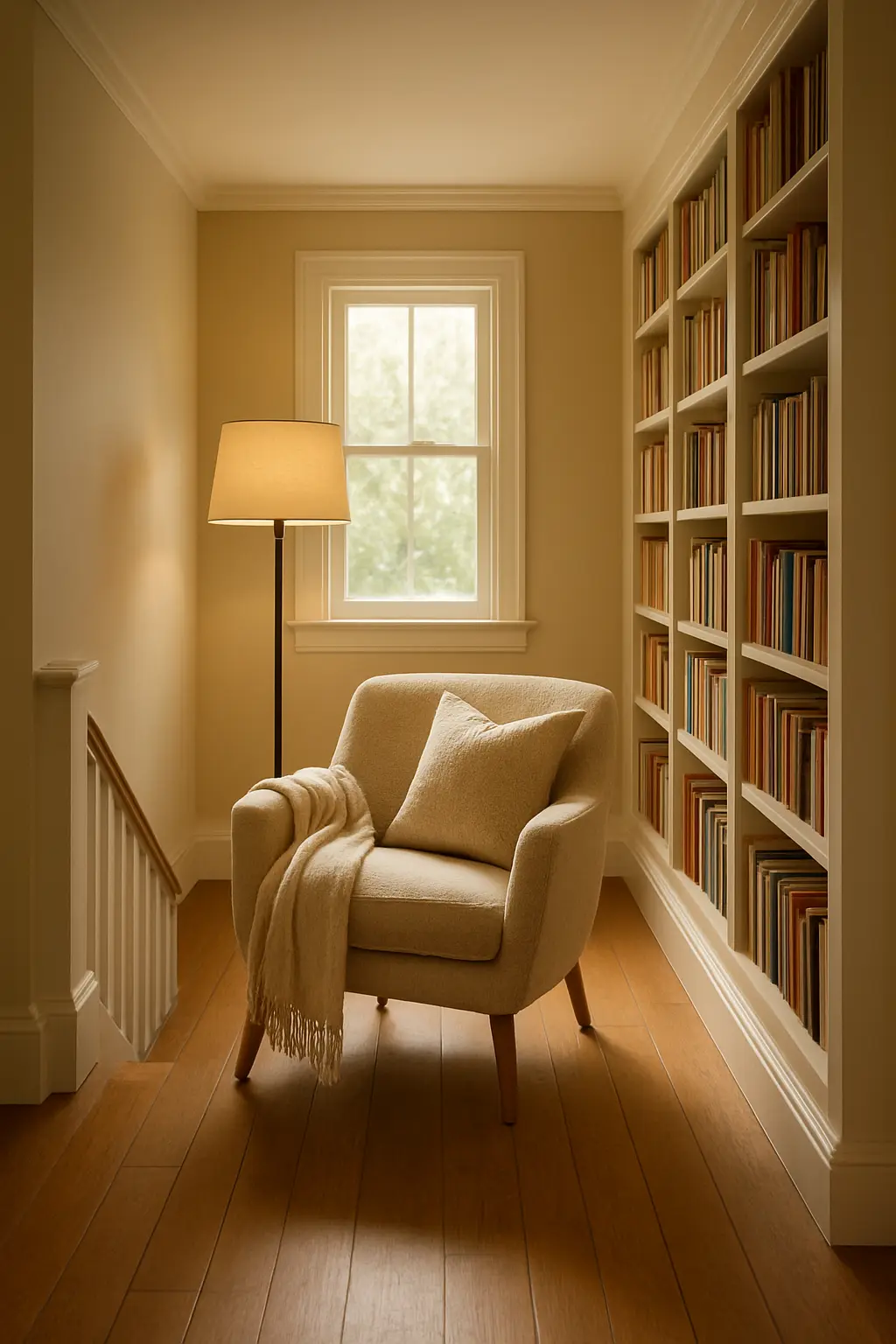
A wider hallway can accommodate a small reading corner with a comfortable chair, side table, and lamp. This transforms unused square footage into a functional retreat.
Adding bookshelves can further enhance the cozy atmosphere.
Why It Works
It gives the hallway a purpose beyond simple circulation.
Design Tips
- Use comfortable seating.
- Add soft lighting.
- Incorporate books and decor.
- Keep the area inviting.
7. Install Decorative Wall Paneling
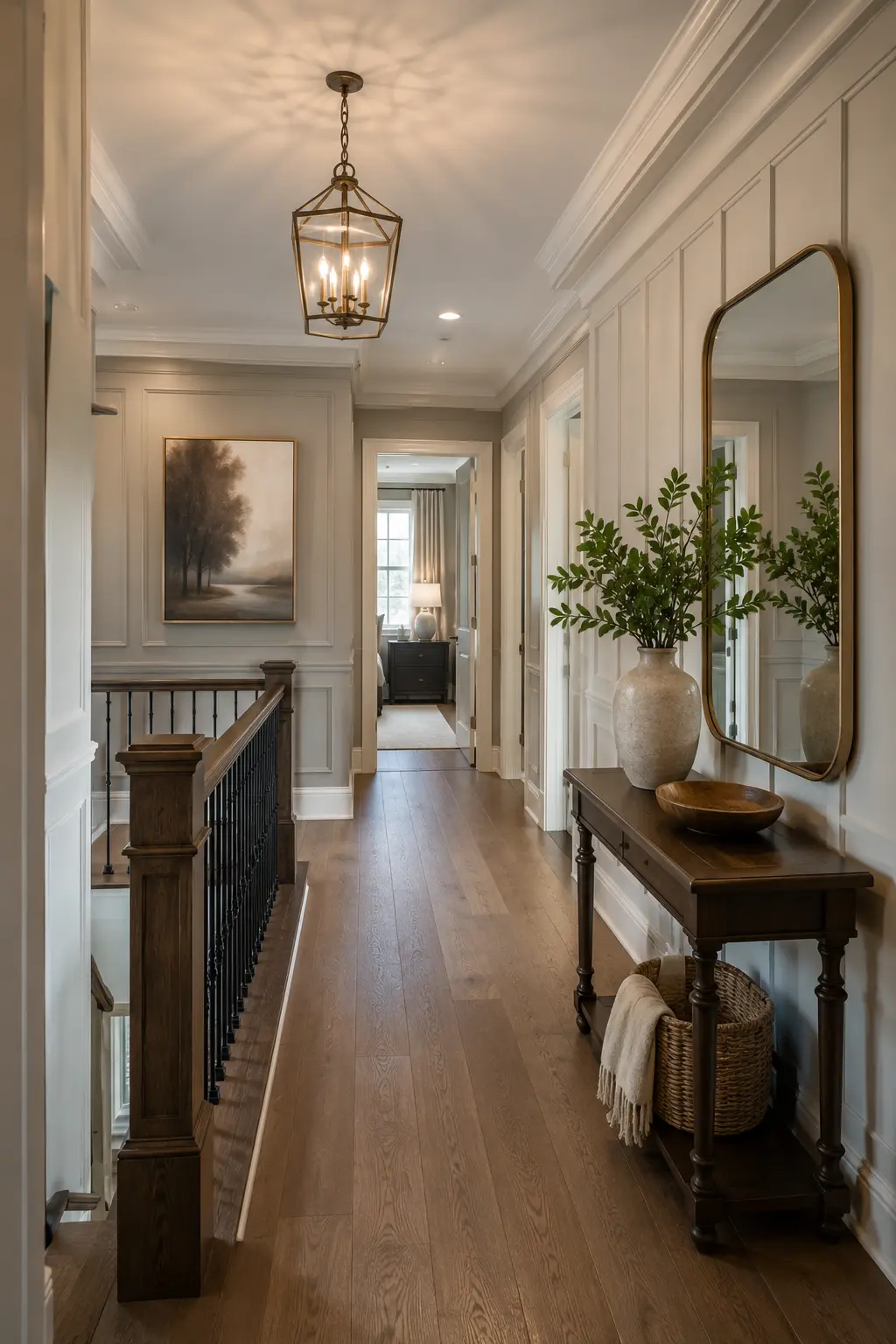
Wall paneling adds architectural character and sophistication. Whether you choose board and batten, shiplap, or modern wood slats, paneling creates texture and visual interest.
This feature works in both traditional and contemporary homes.
Why It Works
Architectural details elevate the entire hallway.
Design Tips
- Paint paneling in complementary colors.
- Extend designs consistently.
- Pair with elegant lighting.
- Keep decor balanced.
8. Add a Hallway Runner Rug
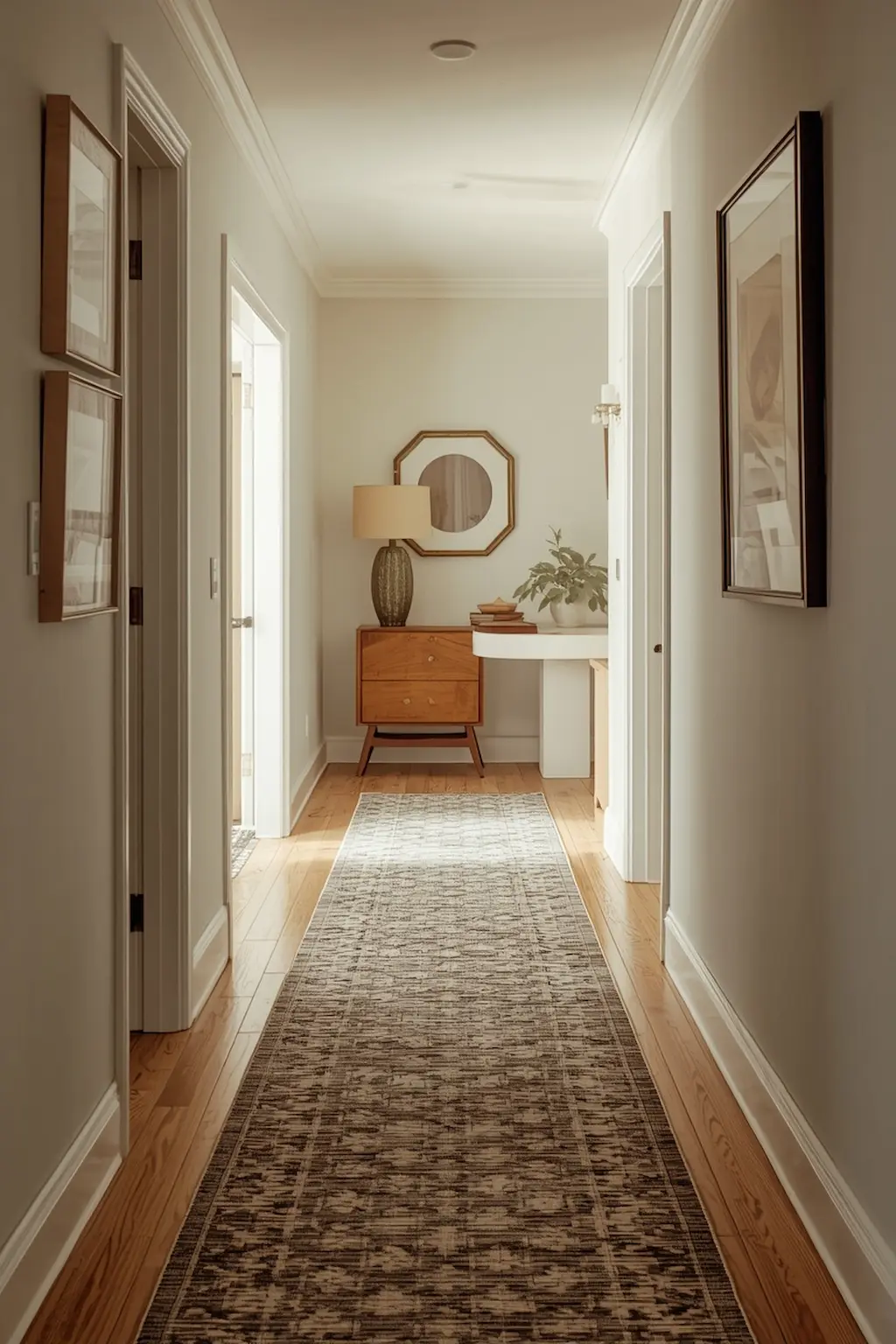
A runner rug introduces warmth, texture, and color while visually elongating the hallway. It also helps reduce noise and creates a more comfortable walking surface.
Choosing a durable material ensures long-lasting performance.
Why It Works
It makes the hallway feel more inviting and complete.
Design Tips
- Select the correct size.
- Coordinate colors with surrounding rooms.
- Use non-slip rug pads.
- Incorporate subtle patterns.
9. Decorate With Large Mirrors
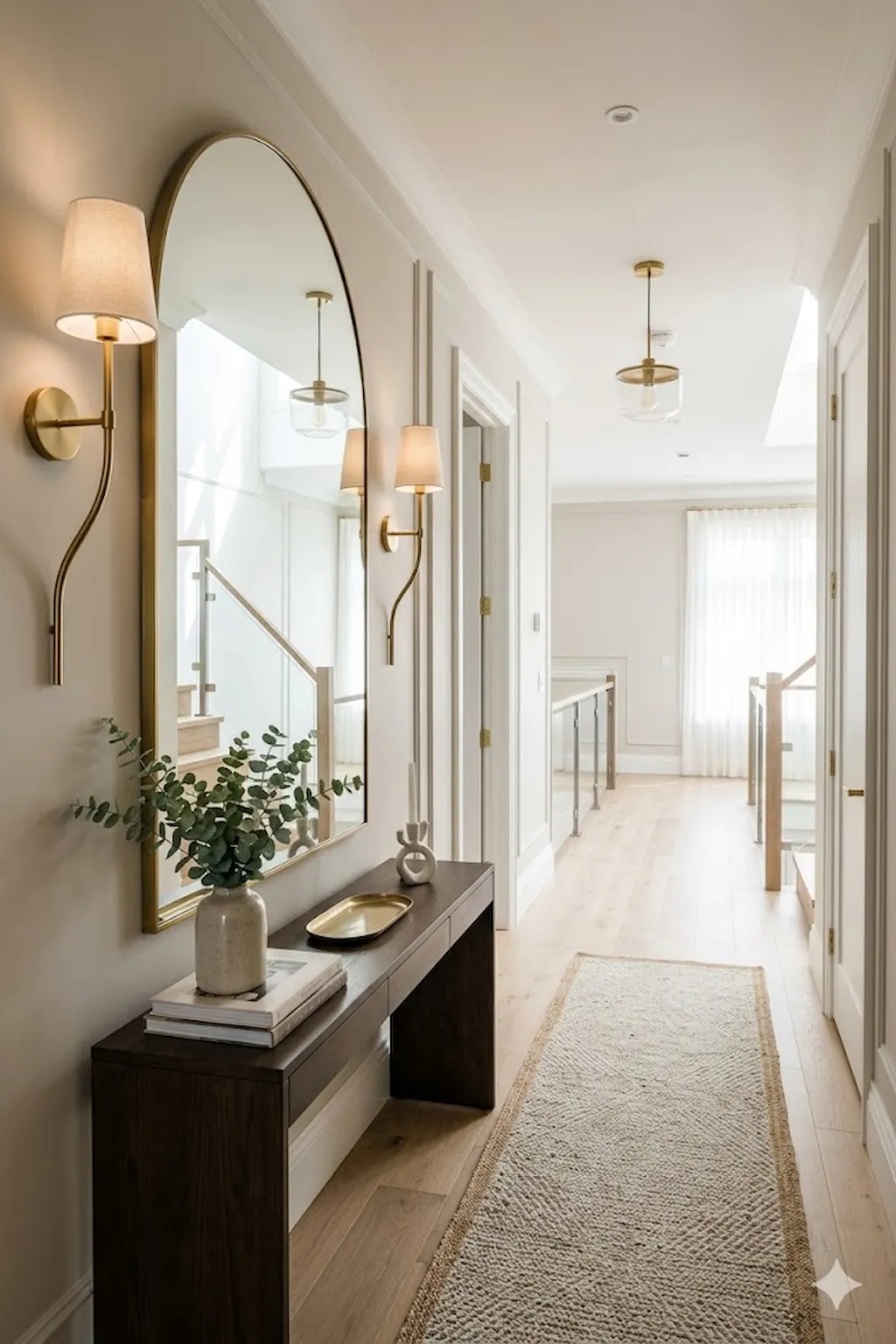
Mirrors are especially useful in upstairs hallways because they reflect light and create the illusion of additional space. A large mirror can become both a decorative feature and a practical addition.
This technique works particularly well in narrow corridors.
Why It Works
Mirrors brighten the space and visually expand the hallway.
Design Tips
- Position mirrors strategically.
- Choose decorative frames.
- Reflect natural light whenever possible.
- Avoid overcrowding nearby walls.
10. Create a Mini Home Library
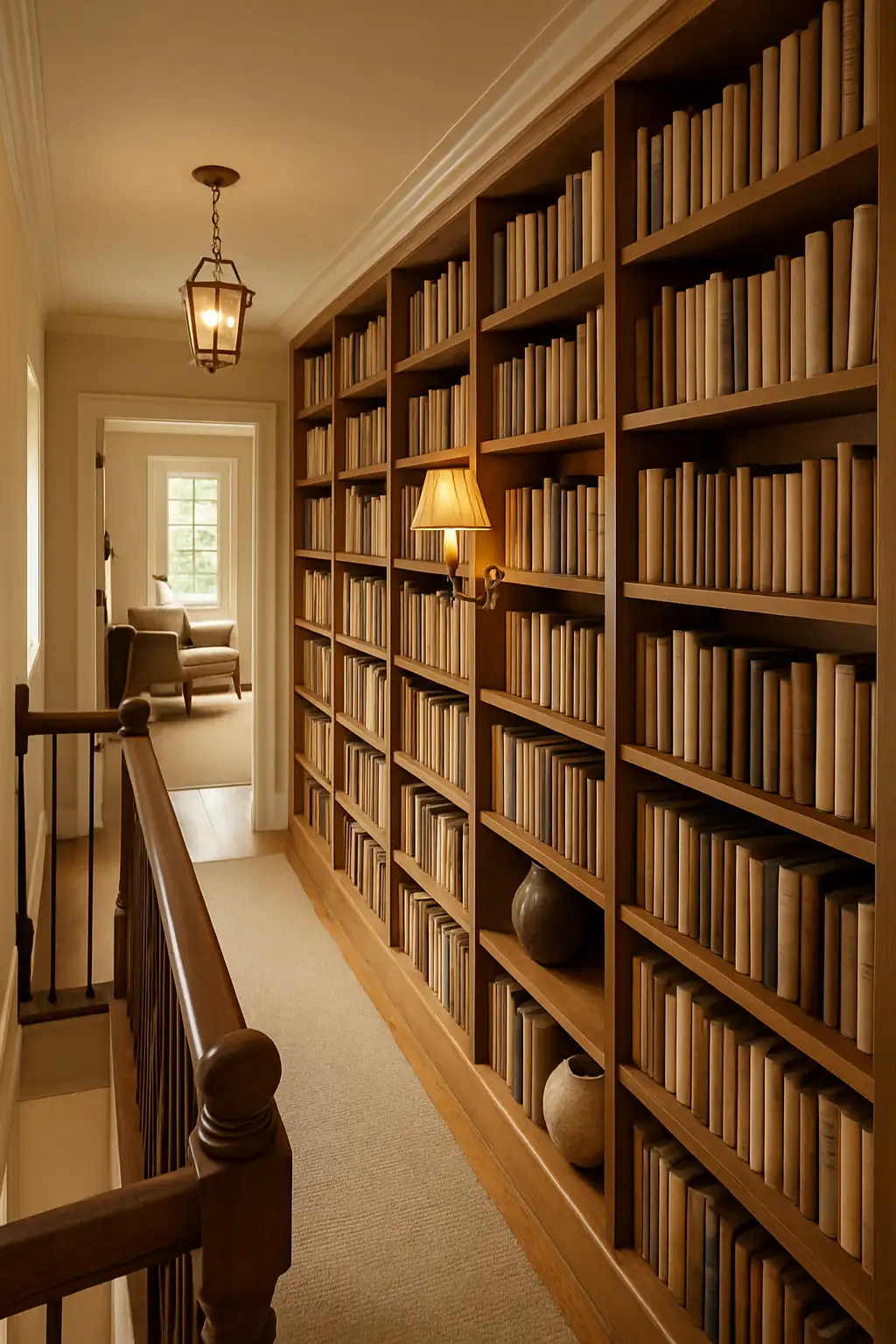
Hallways often have enough wall space to accommodate built-in bookshelves. A small library adds personality while providing practical storage for books and decorative objects.
It creates a sophisticated and welcoming atmosphere.
Why It Works
Bookshelves transform the hallway into a destination rather than merely a passageway.
Design Tips
- Install floor-to-ceiling shelving.
- Mix books and decorative accents.
- Maintain organized displays.
- Include accent lighting.
11. Embrace Scandinavian Simplicity
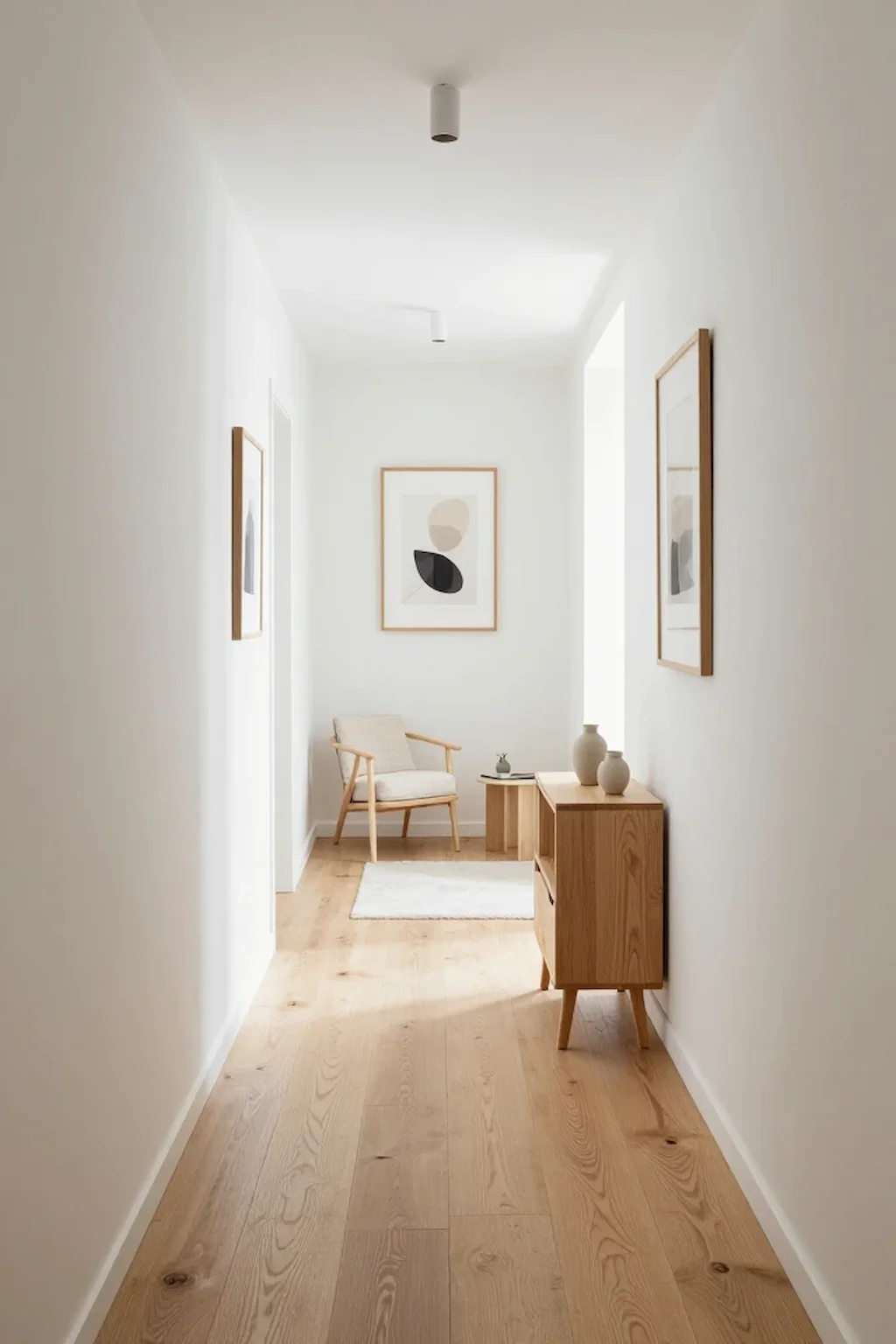
Scandinavian design focuses on functionality, natural materials, and simplicity. Light wood finishes, neutral colors, and uncluttered spaces create a calm and welcoming hallway.
This style is particularly effective in smaller homes.
Why It Works
It makes the hallway feel bright, clean, and timeless.
Design Tips
- Use natural wood elements.
- Stick to neutral colors.
- Limit decorative clutter.
- Prioritize functionality.
12. Add Indoor Plants and Greenery
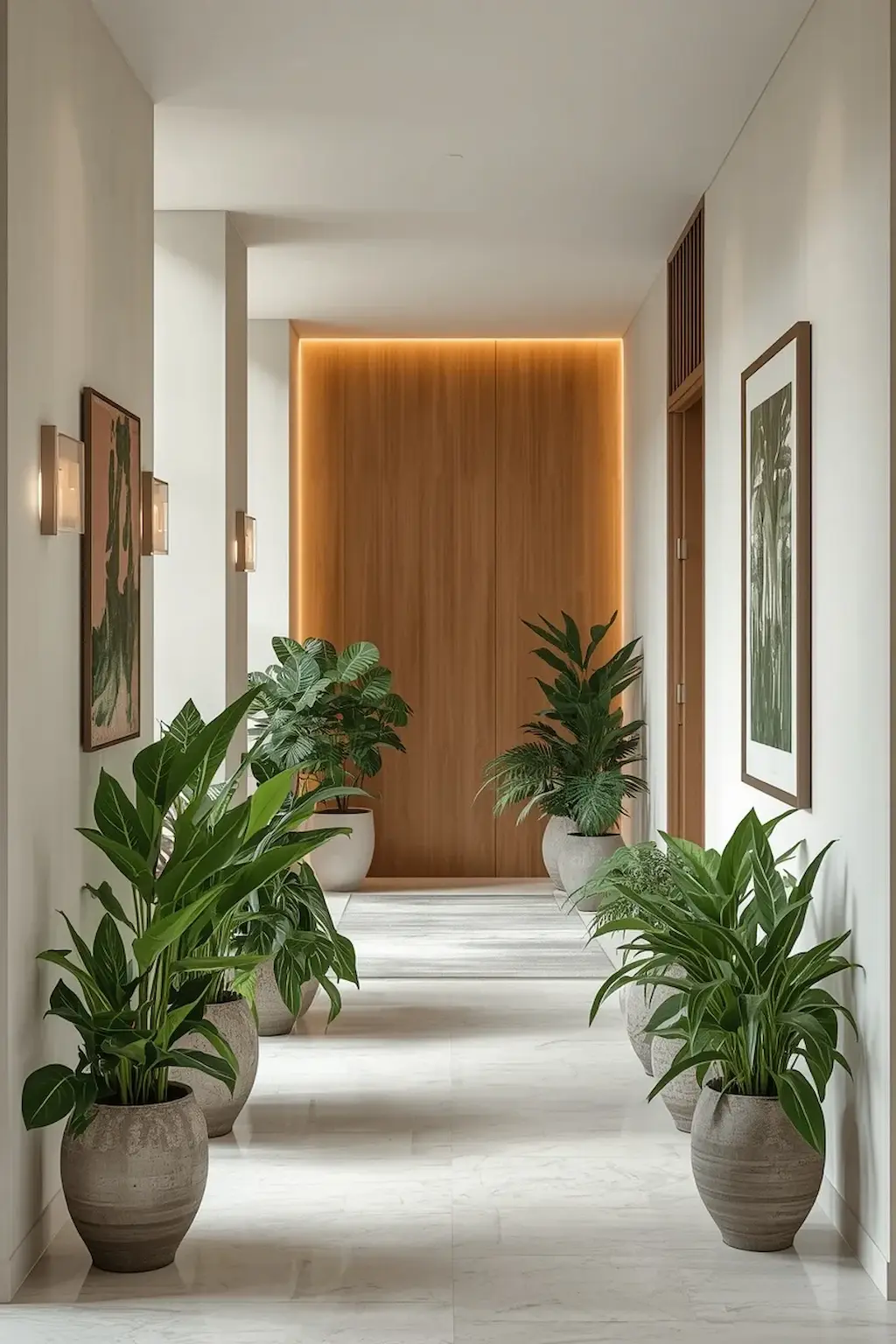
Plants bring life and freshness into any hallway. Whether placed on a console table, shelf, or floor planter, greenery softens the space and creates a stronger connection to nature.
Even a few plants can make a significant impact.
Why It Works
Natural elements add warmth and visual interest.
Design Tips
- Choose low-maintenance plants.
- Use decorative planters.
- Vary plant heights.
- Position near natural light.
13. Design a Modern Minimalist Hallway
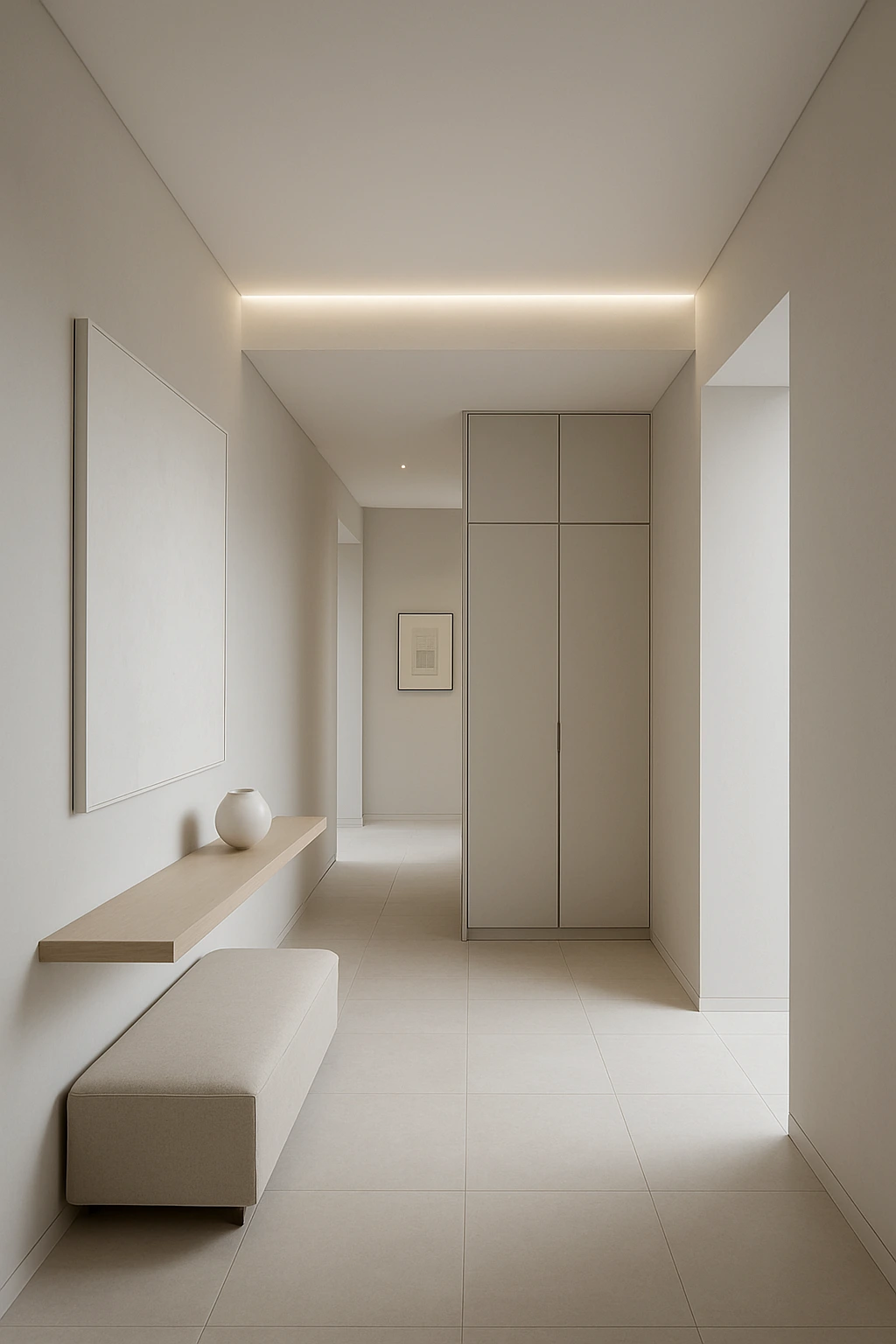
A minimalist hallway emphasizes clean lines, simple decor, and intentional design choices. By reducing clutter and focusing on quality pieces, the space feels more open and sophisticated.
This approach works particularly well in contemporary homes.
Why It Works
Minimalism creates a calm and organized environment.
Design Tips
- Limit decorative items.
- Use streamlined furniture.
- Choose neutral colors.
- Focus on simplicity.
14. Use Artwork as a Focal Point
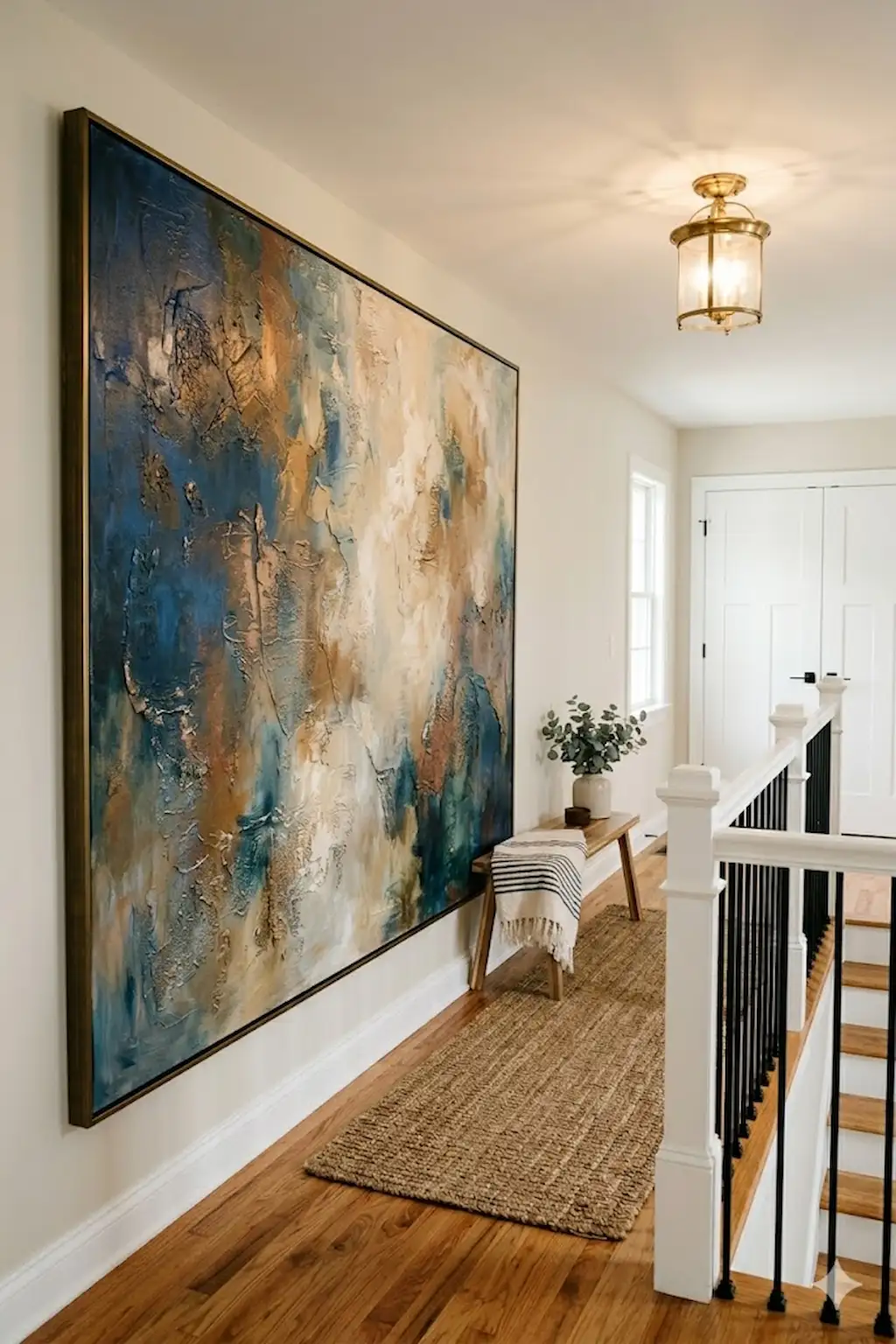
A large piece of artwork can instantly elevate an upstairs hallway. Whether it’s a painting, photograph, or abstract print, artwork creates a visual destination that draws the eye down the corridor.
This approach adds personality without requiring major renovations.
Why It Works
Art introduces color, texture, and character.
Design Tips
- Choose oversized pieces when possible.
- Coordinate colors with surrounding decor.
- Use proper lighting.
- Keep adjacent walls simple.
15. Create a Cohesive Upstairs Design
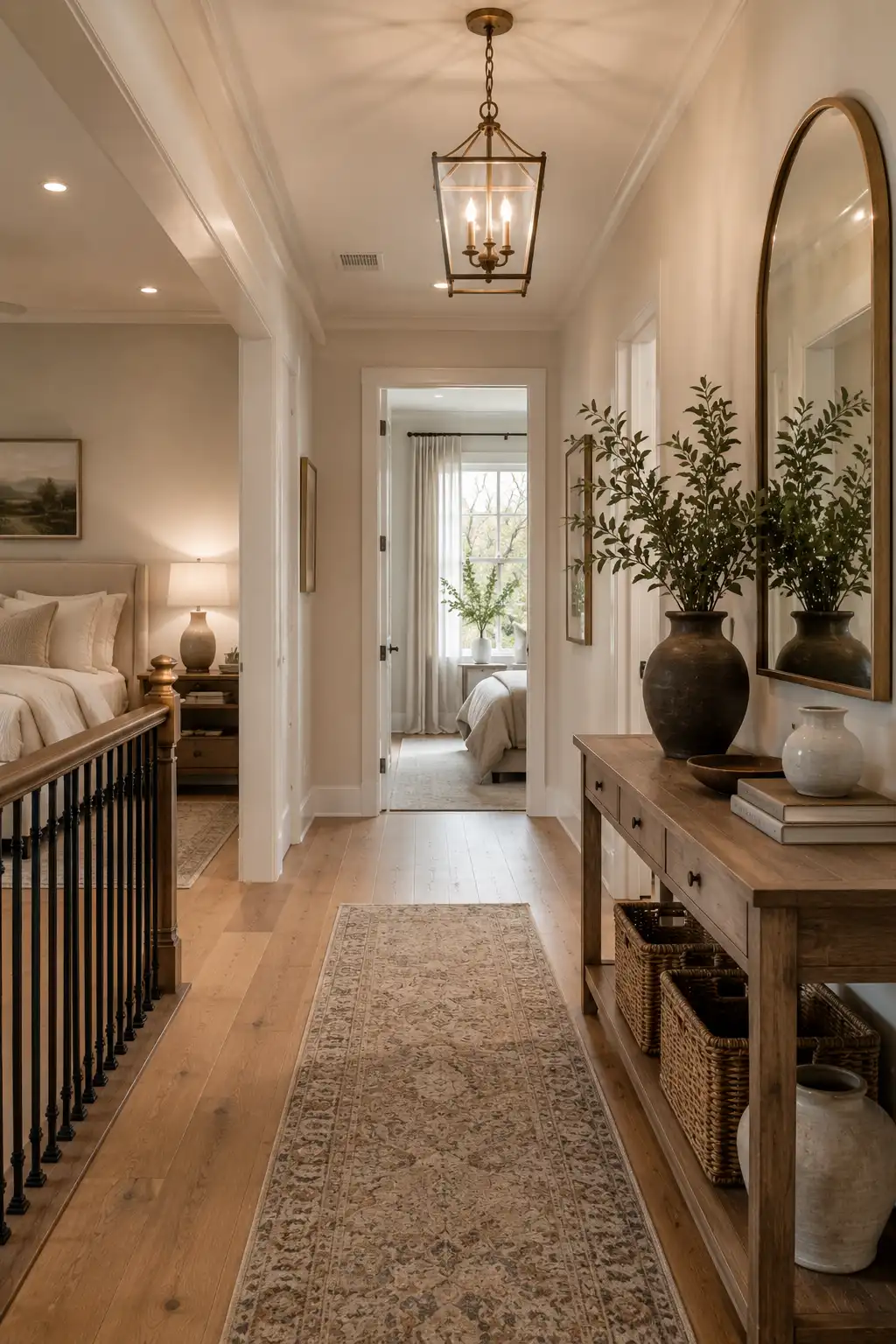
The most successful hallways feel connected to the surrounding rooms. Using consistent colors, flooring, materials, and decor styles helps create a seamless transition throughout the upper level of the home.
This unified approach makes the entire floor feel larger and more harmonious.
Why It Works
Consistency improves flow and creates a polished appearance.
Design Tips
- Repeat design elements throughout the upstairs.
- Coordinate flooring materials.
- Use a cohesive color palette.
- Maintain visual continuity.
Conclusion
An upstairs hallway doesn’t have to be an afterthought. With thoughtful design choices, it can become a stylish and functional extension of your home’s living space. Whether you add a gallery wall, built-in storage, elegant lighting, cozy seating, or beautiful artwork, even small updates can dramatically improve the look and feel of the area.
By treating your hallway as an important part of your home’s design rather than simply a passageway, you can create a space that feels welcoming, purposeful, and beautifully connected to the rest of your interior.


More Stories
12 Chic Narrow Hallway Decor Ideas for Entryways
15 Beautiful TV Wall Ideas for Modern Living Room
12 Modern Fireplace Ideas to Upgrade Your Living Room