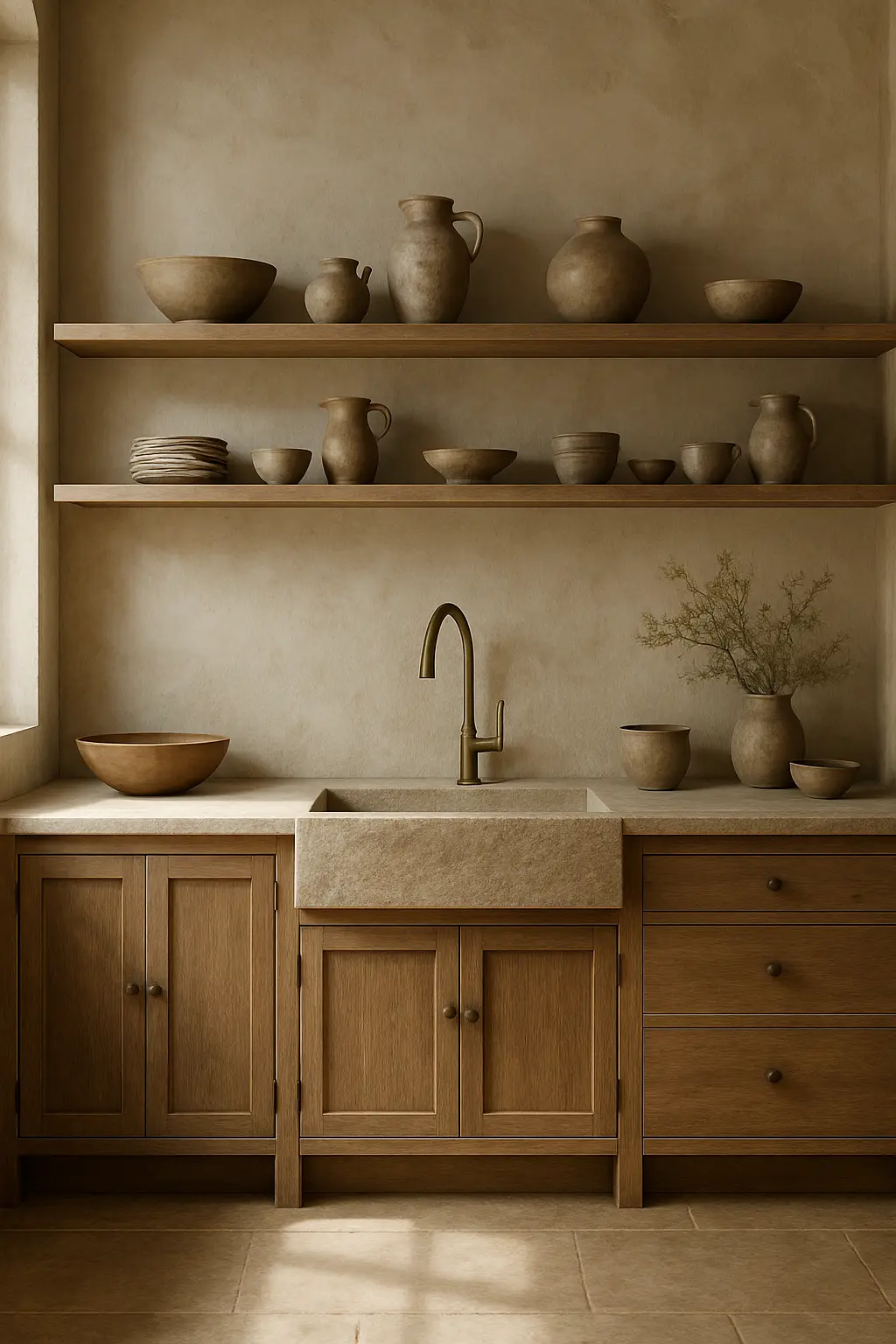
The kitchen is often called the heart of the home, but in a world filled with polished surfaces and perfect finishes, many homeowners are embracing a more natural and authentic approach to design. Wabi Sabi, a Japanese philosophy centered around simplicity, imperfection, and the beauty of natural aging, offers a refreshing alternative to modern perfectionism.
A Wabi Sabi kitchen celebrates organic materials, handcrafted details, and a sense of calm that makes the space feel warm and lived-in. Rather than hiding imperfections, this design style embraces them, allowing natural textures, weathered finishes, and earthy colors to tell a story. The result is a kitchen that feels welcoming, timeless, and deeply connected to nature.
Whether you’re planning a complete renovation or looking for subtle ways to bring Wabi Sabi charm into your home, these beautiful kitchen ideas will inspire you to create a space filled with character, balance, and understated elegance.
1. Natural Wood Kitchen with Organic Charm
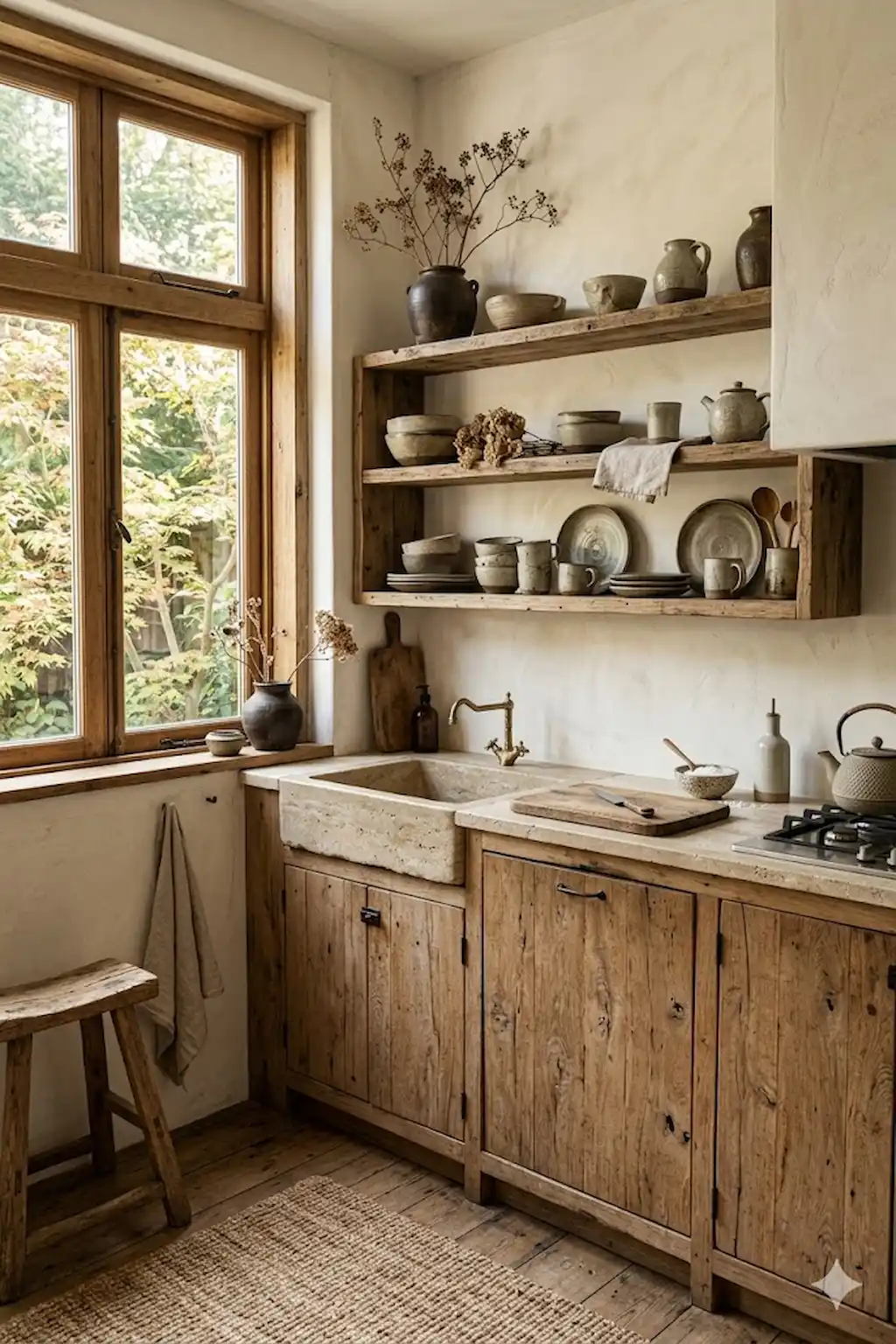
Imagine a kitchen where warm wooden cabinets showcase natural grain patterns, knots, and subtle imperfections. The beauty of unfinished or lightly treated wood creates an atmosphere that feels authentic and inviting. Open shelving displays handmade pottery and everyday essentials, while soft natural light highlights the rich textures throughout the space.
This design embraces simplicity while allowing natural materials to become the focal point. The combination of earthy tones and organic finishes creates a kitchen that feels peaceful and timeless.
- Choose natural wood with visible grain.
- Display handcrafted ceramics.
- Keep décor simple and meaningful.
- Use warm, natural lighting.
2. Earth-Toned Minimalist Kitchen
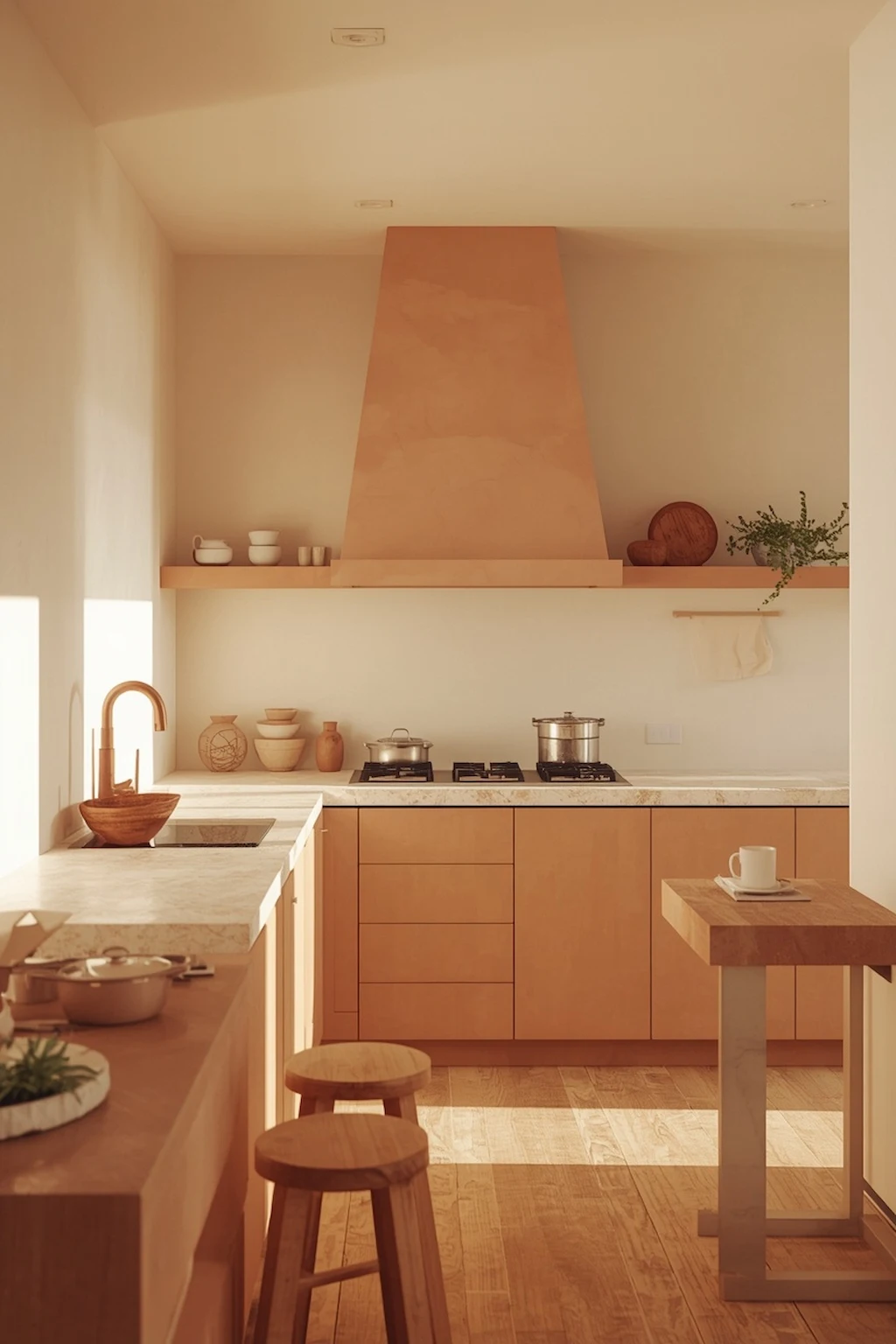
A Wabi Sabi kitchen thrives on a soothing color palette inspired by nature. Soft beige walls, clay-colored accents, and stone countertops create a calming environment that feels effortlessly beautiful. Minimal cabinetry and uncluttered surfaces help the room breathe while maintaining functionality.
The beauty of this design lies in its restraint. Every element serves a purpose, creating harmony without unnecessary decoration.
- Use warm neutral colors.
- Focus on simplicity and balance.
- Avoid excessive decorations.
- Incorporate natural materials.
3. Rustic Stone and Wood Kitchen
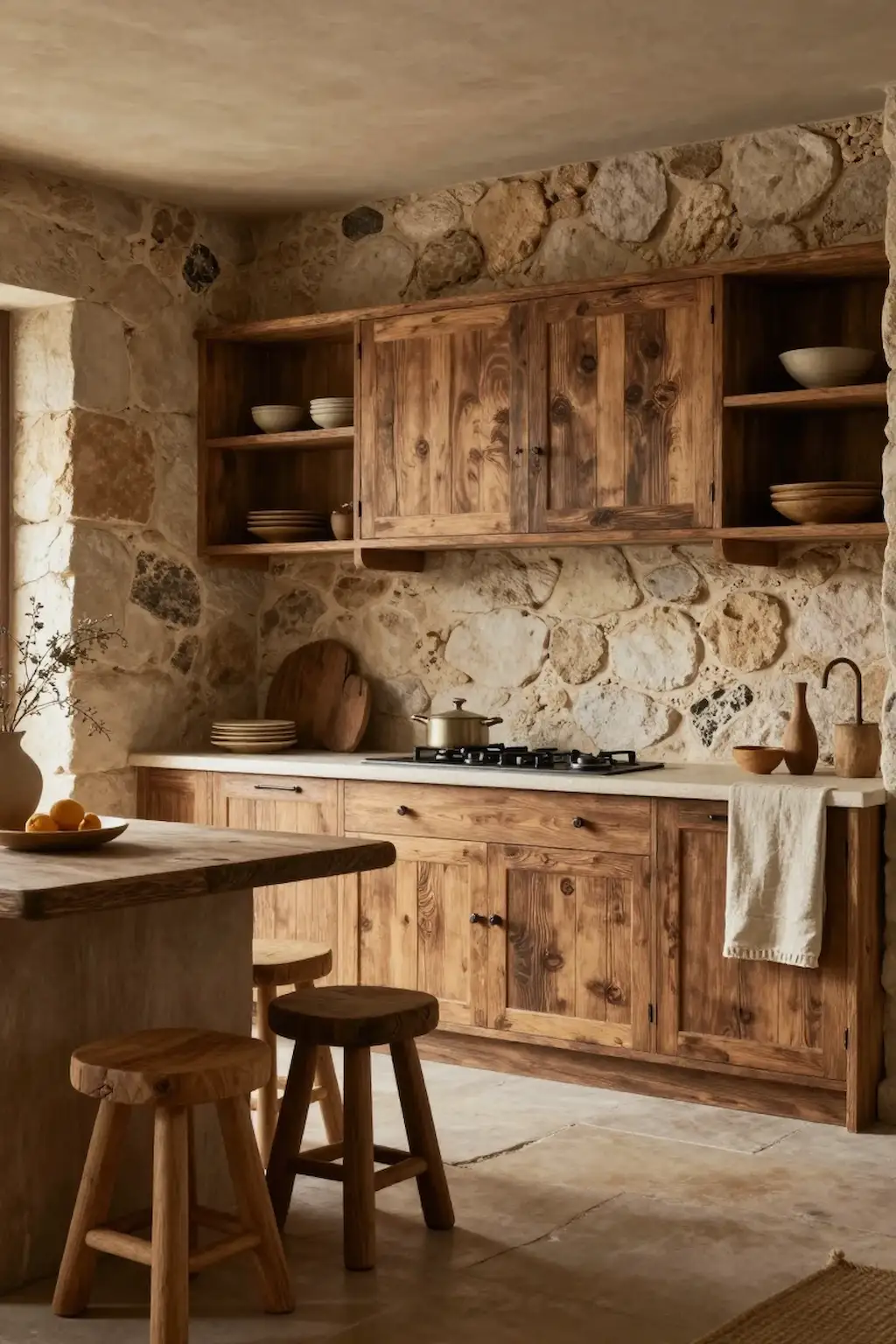
Picture a kitchen where rough stone walls meet weathered wooden cabinets. The contrast between these natural textures creates depth and visual interest while maintaining a grounded and organic aesthetic. Handmade wooden stools and simple linen textiles add warmth and character.
The aged appearance of the materials enhances the authenticity of the space, making it feel connected to nature and tradition.
- Combine wood and stone textures.
- Use handmade furniture pieces.
- Add linen accents for softness.
- Embrace natural imperfections.
4. Open Shelving with Handmade Pottery
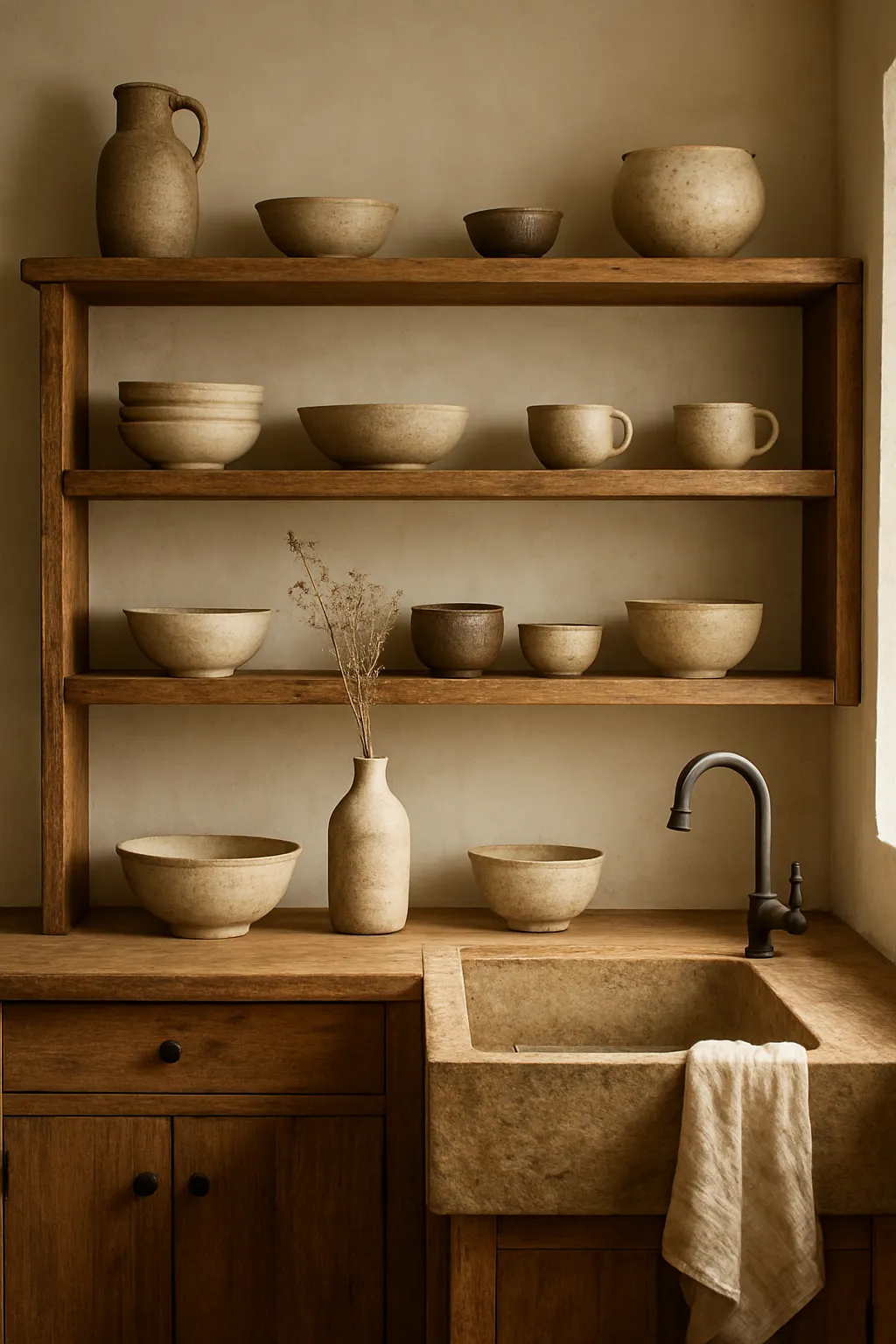
Instead of hiding everything behind cabinets, open shelving allows beautiful everyday items to become part of the design. Handmade bowls, ceramic plates, and artisan mugs create a curated display that feels personal and inviting.
The shelves themselves can be crafted from reclaimed wood, adding another layer of texture and authenticity.
- Display handmade kitchenware.
- Use reclaimed wood shelves.
- Keep arrangements simple.
- Focus on quality over quantity.
5. Concrete Kitchen with Soft Organic Touches
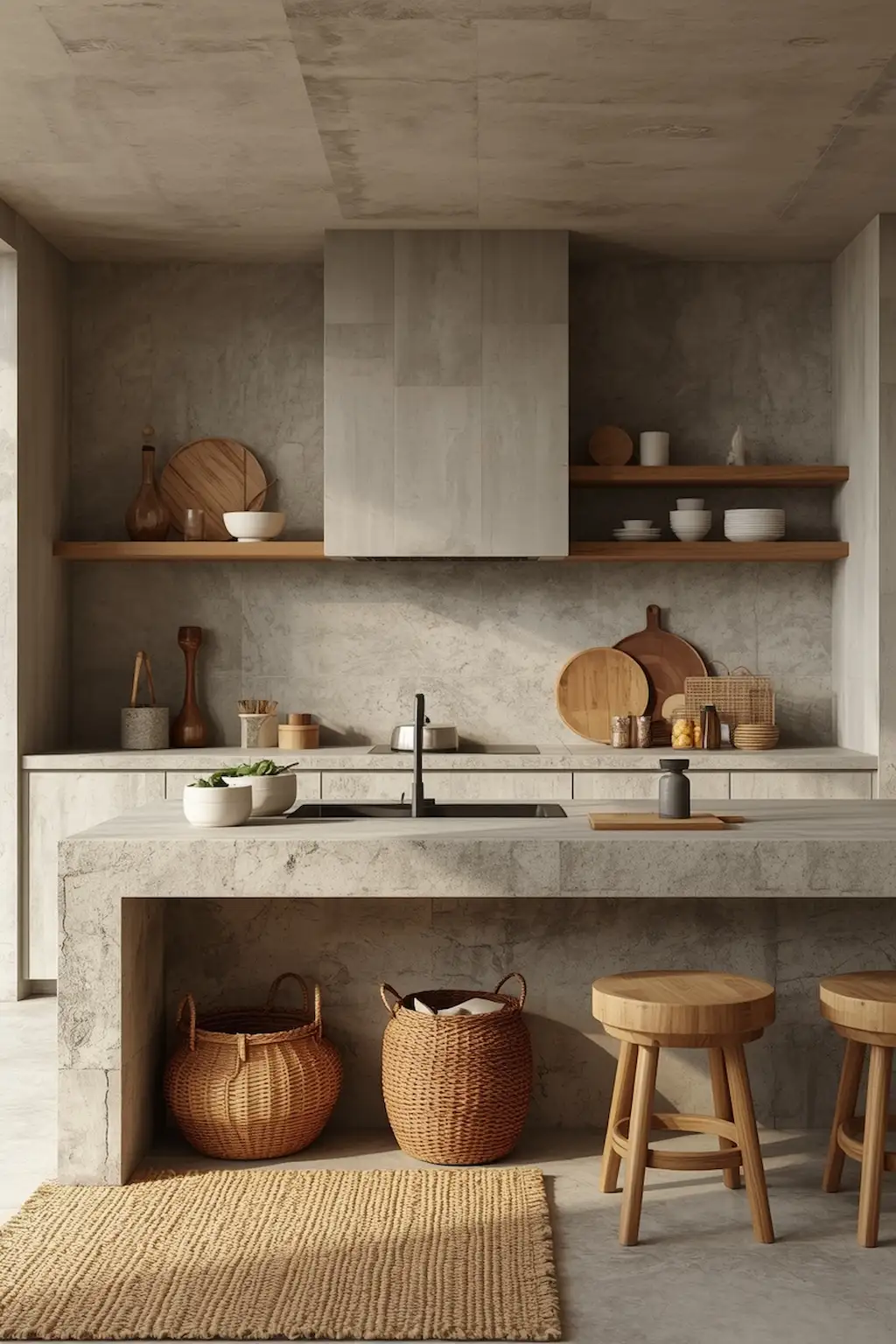
A modern interpretation of Wabi Sabi combines raw concrete surfaces with softer natural elements. Concrete countertops and walls provide a minimalist backdrop, while wooden accents and woven textures introduce warmth and balance.
The contrast creates a sophisticated yet relaxed atmosphere that feels both contemporary and timeless.
- Mix concrete with natural materials.
- Add woven baskets and textiles.
- Use soft lighting for warmth.
- Keep the color palette neutral.
6. Japandi-Inspired Wabi Sabi Kitchen
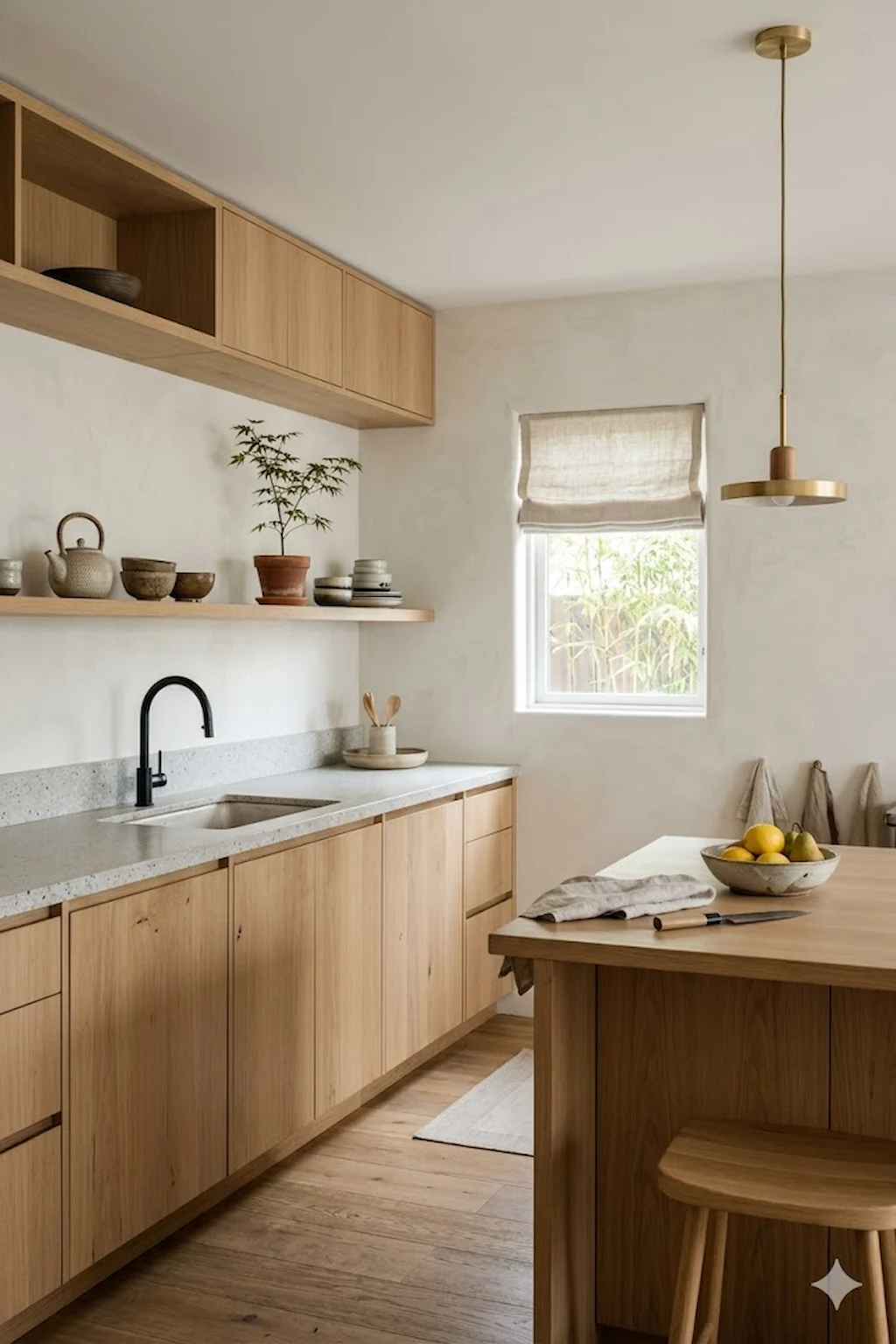
Japandi design blends Japanese simplicity with Scandinavian functionality, making it a perfect companion to Wabi Sabi principles. Light wood cabinetry, clean lines, and carefully selected décor create a kitchen that feels calm and organized.
Every item has a purpose, contributing to a space that is both beautiful and highly functional.
- Choose simple furniture designs.
- Stick to neutral color palettes.
- Prioritize functionality.
- Incorporate natural textures.
7. Kitchen with Reclaimed Wood Accents
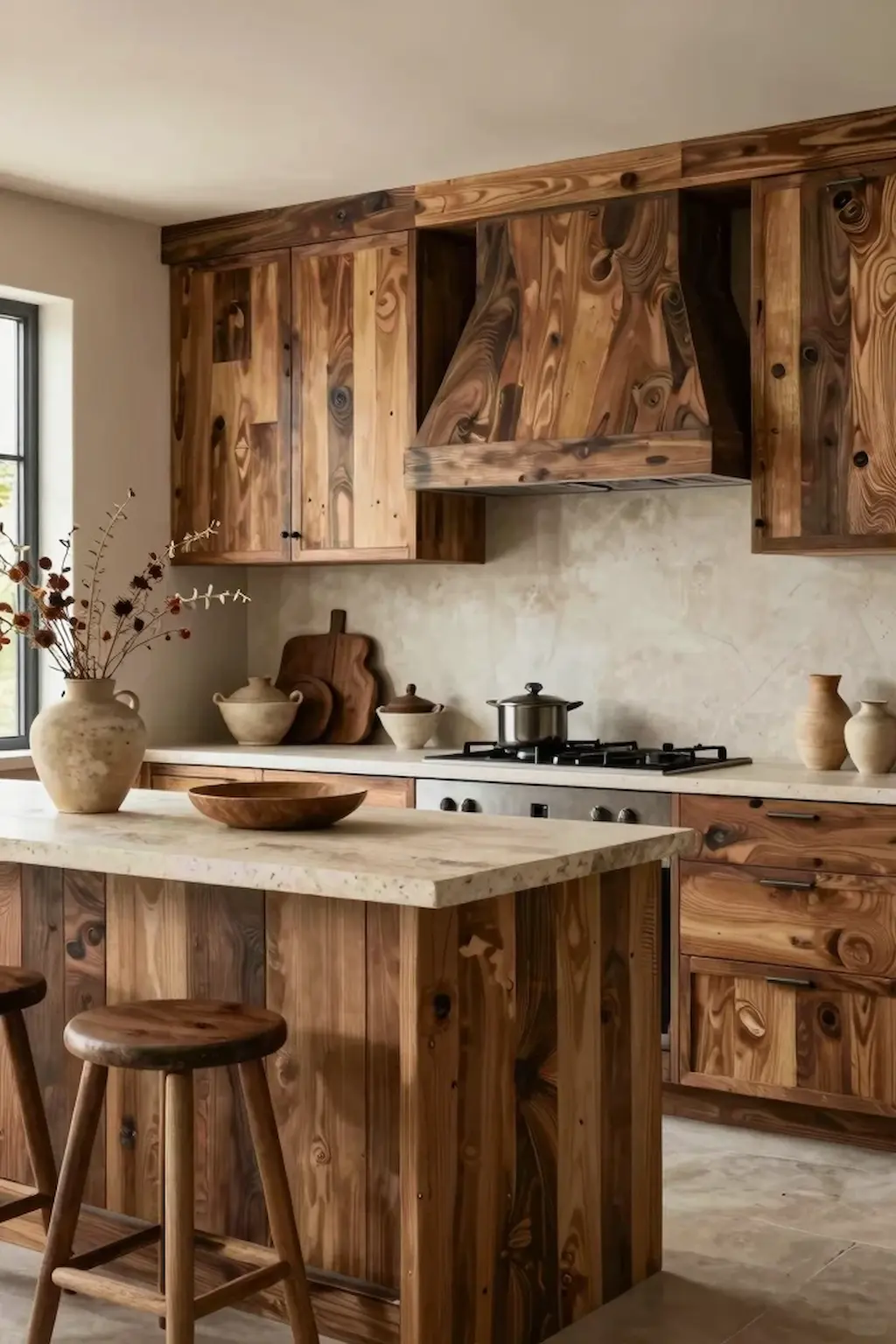
Reclaimed wood adds instant character to a Wabi Sabi kitchen. Whether used for cabinets, shelving, or a kitchen island, aged wood brings warmth and history into the space. Its unique imperfections tell a story that new materials simply cannot replicate.
Combined with stone surfaces and handmade décor, reclaimed wood creates an effortlessly authentic aesthetic.
- Use salvaged or reclaimed materials.
- Highlight natural aging and wear.
- Pair with stone and ceramics.
- Keep finishes matte and understated.
8. Soft Clay and Terracotta Kitchen
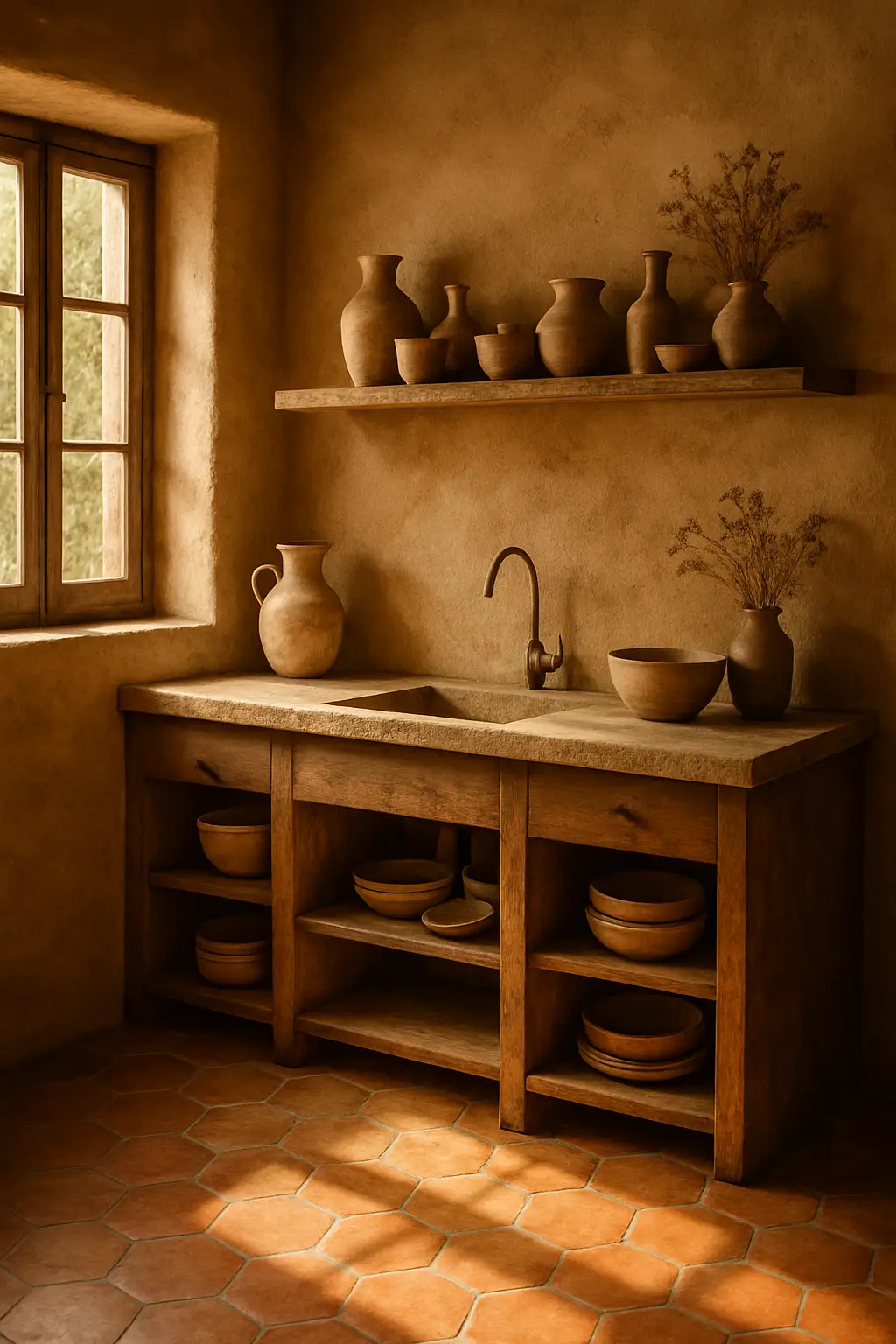
Earthy clay and terracotta tones create a kitchen that feels grounded and welcoming. Textured plaster walls, terracotta floor tiles, and handmade pottery contribute to the organic beauty of the space.
Natural sunlight enhances these warm tones, making the kitchen feel cozy throughout the day.
- Incorporate clay-inspired colors.
- Use textured wall finishes.
- Add terracotta accessories.
- Embrace earthy warmth.
9. Wabi Sabi Kitchen with Indoor Plants
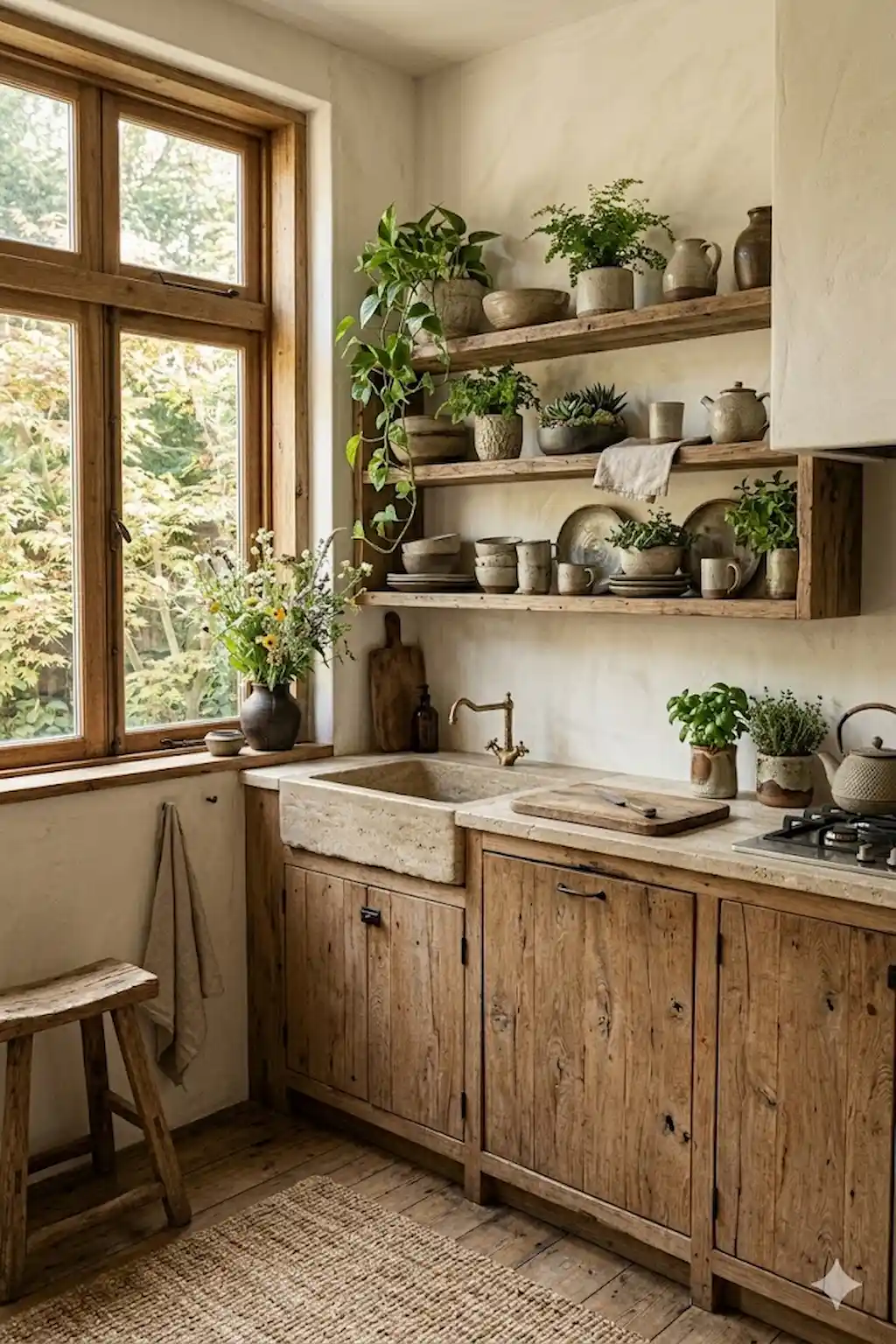
Nature plays an important role in Wabi Sabi design. Adding indoor plants brings life, color, and freshness into the kitchen while strengthening the connection to the natural world.
Simple ceramic planters and carefully chosen greenery complement the organic materials used throughout the space.
- Add easy-care indoor plants.
- Use handmade planters.
- Place greenery near natural light.
- Keep arrangements natural and relaxed.
10. Linen and Natural Texture Kitchen
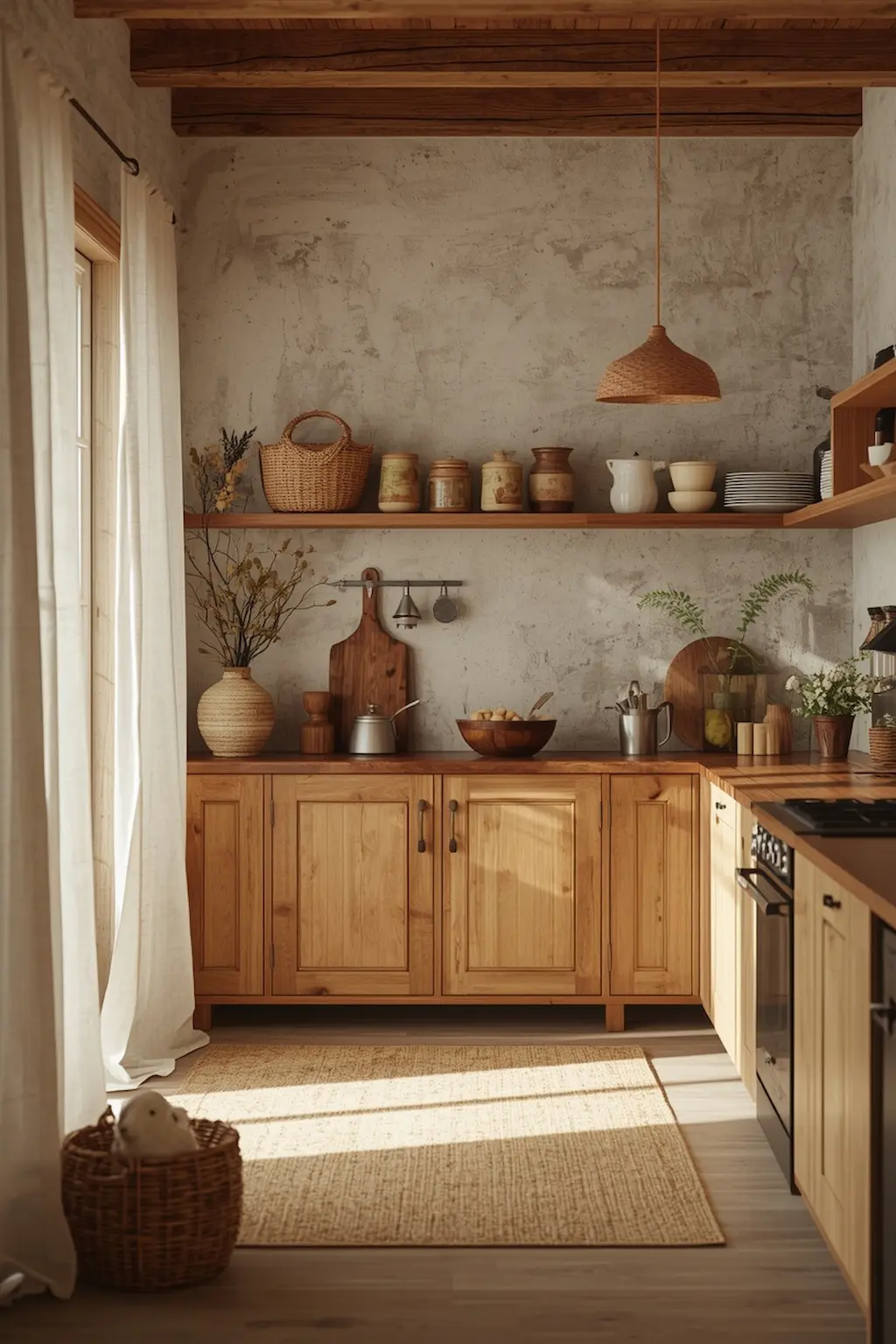
Textiles may seem like a small detail, but they play a major role in creating warmth within a Wabi Sabi kitchen. Linen curtains, woven baskets, and soft table runners introduce texture while maintaining the relaxed aesthetic.
These subtle details make the kitchen feel comfortable, lived-in, and welcoming.
- Use natural fabrics like linen.
- Add woven storage baskets.
- Choose muted colors.
- Focus on texture over decoration.
11. Imperfect Handmade Kitchen Details
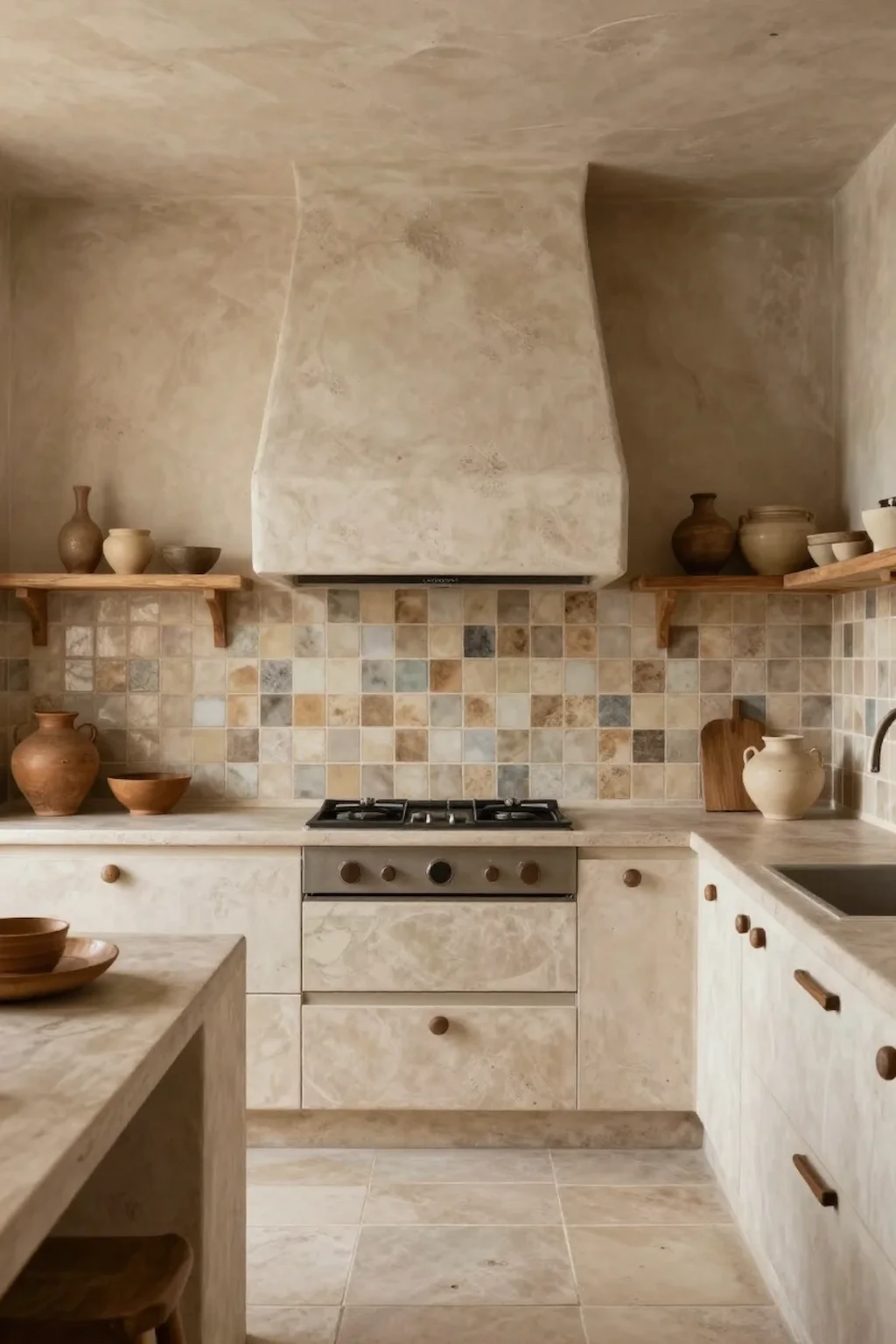
The true essence of Wabi Sabi lies in appreciating imperfection. Handmade tiles with slight variations, artisan pottery, and handcrafted wooden elements create a kitchen filled with personality and authenticity.
Rather than striving for perfection, this design celebrates the beauty found in uniqueness and craftsmanship.
- Embrace handmade elements.
- Avoid overly polished finishes.
- Celebrate natural variations.
- Focus on authenticity and simplicity.
Conclusion
Wabi Sabi kitchen design offers a refreshing approach to modern living by embracing simplicity, natural beauty, and the charm of imperfection. Through organic materials, earthy color palettes, handcrafted details, and thoughtful design choices, these kitchens create a sense of peace that feels both timeless and welcoming.
Whether you incorporate reclaimed wood, handmade pottery, textured walls, or soft natural fabrics, the goal is to create a space that feels authentic and lived-in. By embracing the principles of Wabi Sabi, you can transform your kitchen into a warm and meaningful environment where beauty is found in simplicity and imperfection.


More Stories
12 Modern Open Kitchen Designs for a High-End Look
20+ Better Yellow Kitchen Cabinets Design Minimalistic
20 Rustic Kitchen Ideas for Embracing Timeless Charm